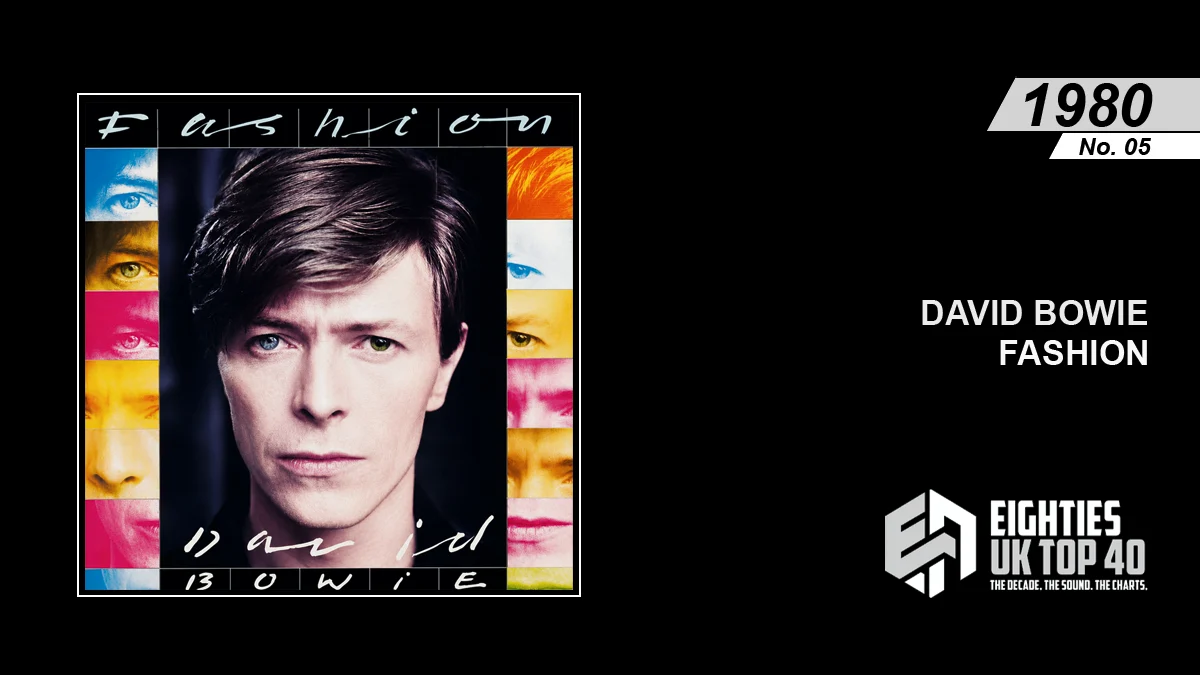
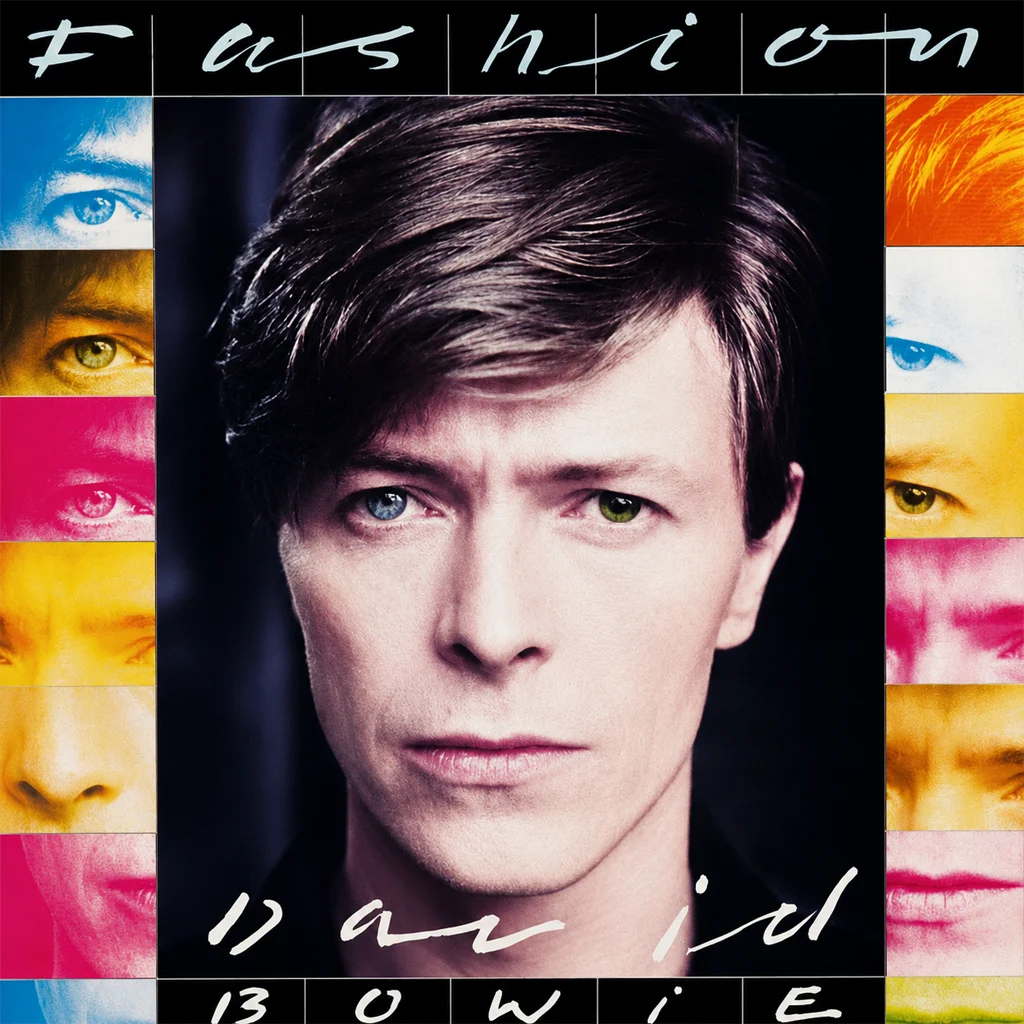
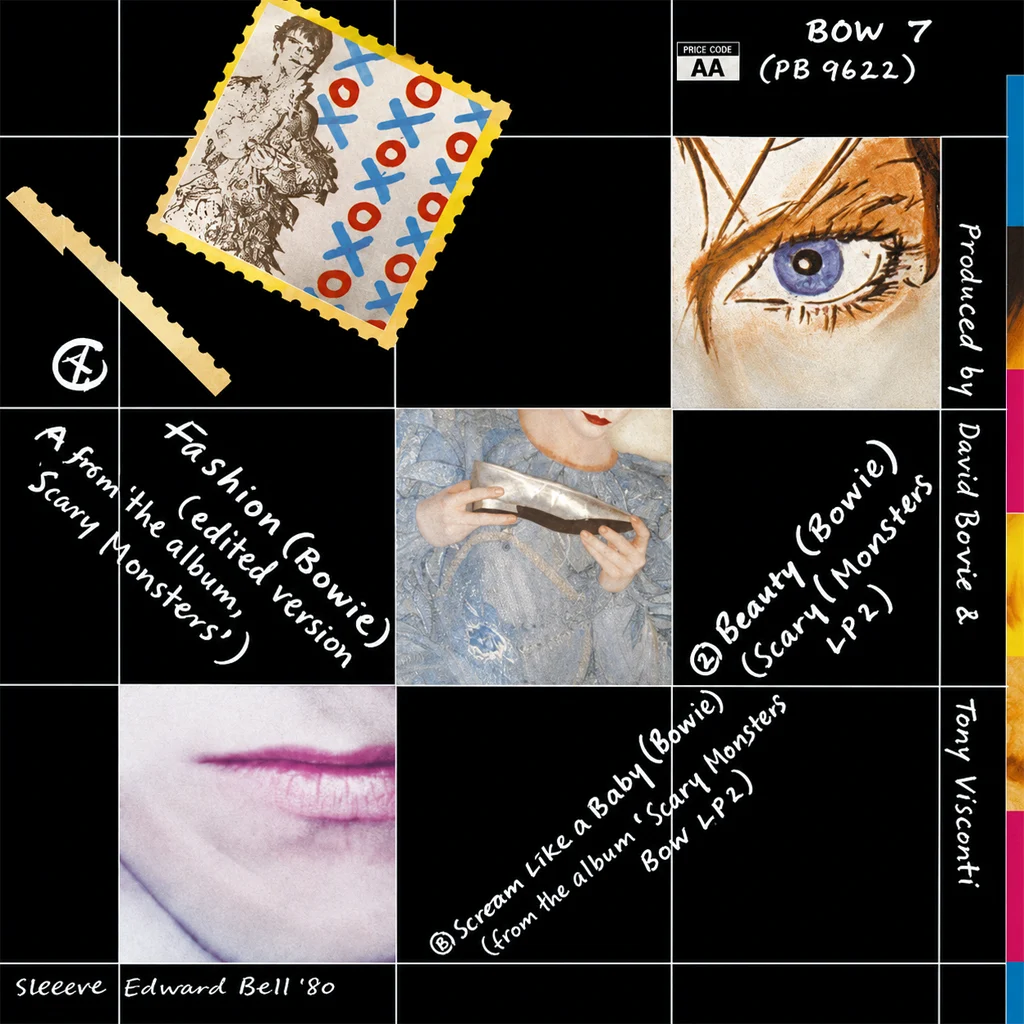
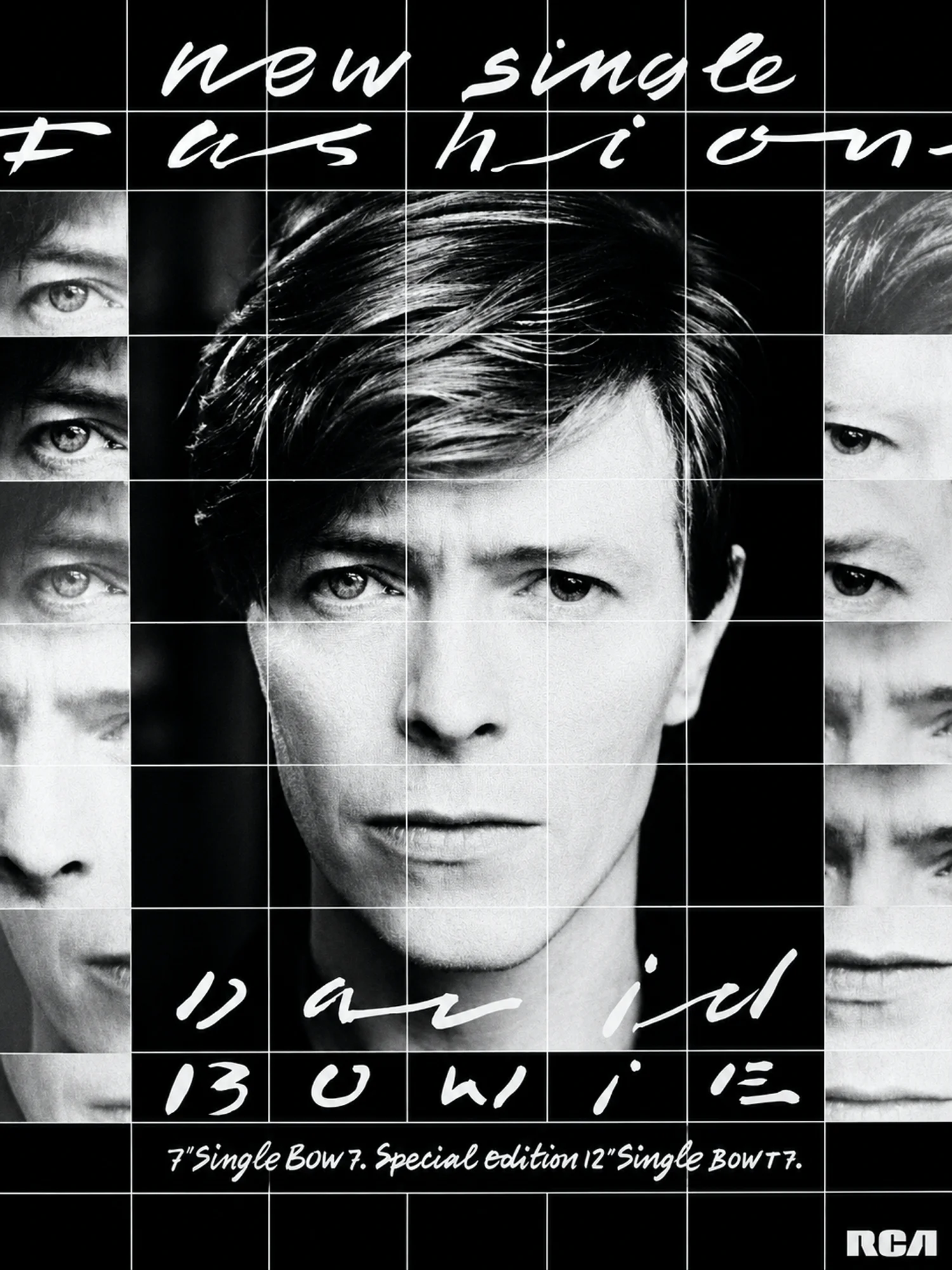
David Bowie’s 1980 single “Fashion” stands as a brilliant, razor-sharp critique of conformity, consumerism, and the cyclical nature of cultural trends. Released as the second single from his critically acclaimed album “Scary Monsters (and Super Creeps),” the song served as a vital bridge between the experimental, avant-garde textures of his late-1970s “Berlin Trilogy” and the massive, radio-friendly commercial pop stardom that would define his career in the 1983 “Let’s Dance” era. By wrapping a biting, cynical social commentary inside an incredibly infectious, robotic dance groove, Bowie created a timeless anthem that simultaneously anticipated and dismantled the style-obsessed decade of the 1980s.
The sonic construction of “Fashion” is an extraordinary exercise in tension and rhythmic precision. Built upon a hard, mechanical funk groove, the song reflects Bowie’s deep fascination with the burgeoning post-punk and no-wave scenes of New York City. The rhythm section, powered by the driving bassline of George Murray and the precise, metronomic drumming of Dennis Davis, establishes a dancefloor-ready foundation that feels intentionally rigid and cold. The true sonic chaos, however, is provided by guitarist Robert Fripp of King Crimson. Fripp’s contributions consist of jagged, abrasive, and wildly unpredictable guitar riffs that slash through the disciplined funk rhythm. This deliberate clash between a structured dance beat and dissonant rock instrumentation perfectly mirrors the song’s underlying thematic conflict between rigid societal conformity and individual artistic rebellion.
Lyrically, Bowie uses “Fashion” to examine the concept of style not as a form of liberation, but as an authoritarian tool used to enforce uniformity. The lyrics treat the fashion world as a militaristic regime, using phrases like “the fashion squad” and “the goon squad” to suggest that keeping up with trends is a form of mandatory ideological compliance. Bowie’s repetitive, robotic chanting of “turn to the left, turn to the right” mimics both the mechanical movements of models walking down a runway and the regimented drills of soldiers executing military commands. By conflating the benign world of haute couture with totalitarian control, Bowie delivers a prophetic warning about how easily a society can be manipulated through consumerism and the desperate, human desire to belong to the “in-crowd.”
Bowie’s vocal performance on the track is masterfully theatrical and detached. He shifts effortlessly between a cool, spoken-word monotone during the verses and a dramatic, soaring delivery in the choruses. His voice carries a palpable sense of weariness and irony, sounding like a cynical ringmaster presiding over a hollow spectacle. The inclusion of sudden, erratic vocal tics, such as the repeated “beep-beep” exclamation borrowed from his own earlier track “Space Oddity,” adds a layer of surrealism to the performance. This vocal choices heighten the feeling that the song is being delivered by an artificial entity, an observer who sees right through the superficial glamour of the scene he is describing.
The visual representation of “Fashion” was equally instrumental in cementing its legacy. The accompanying music video, directed by David Mallet, was shot in a gritty, subterranean New York dance club and featured a mix of real-life clubgoers and professional dancers. Bowie appears in the video looking striking but distinctly alienated, executing awkward, spastic dance movements that directly contrast with the sleek, synchronized choreography of the crowd surrounding him. The video perfectly captured the burgeoning New Romantic subculture of the era—a movement that openly idolized Bowie’s aesthetic—while subtly mocking the very obsession with surface-level image that defined it. It became a staple of early MTV, showcasing Bowie’s unmatched ability to manipulate visual media to enhance his musical narratives.
Commercially and critically, “Fashion” was a major triumph, reaffirming Bowie’s cultural relevance at the dawn of a new decade. The single reached number five on the UK Singles Chart and became an influential club hit in the United States, proving that Bowie could still command the dancefloors while delivering complex, challenging art. Critics praised the song for its innovative fusion of dance-rock and its astute cultural foresight. It demonstrated that even as he moved toward a more accessible sonic palette, Bowie refused to sacrifice the intellectual depth and experimental edge that made him one of the most vital artists of his generation.
Decades after its release, “Fashion” remains a strikingly relevant cultural touchstone. Its unique blend of mechanical funk and aggressive guitar noise has been cited as a primary influence by generations of alternative, industrial, and dance-punk artists. Moreover, in an era dominated by social media algorithms, fast fashion, and the constant pressure to curate a performative public image, Bowie’s critique of the “fashion squad” feels more prescient than ever. The track stands as a definitive monument to Bowie’s genius, proving that the most potent pop music is often that which holds a mirror up to society’s vanities, forcing us to dance to the beat of our own absurdities.
It peaked at No. 05 in the UK Singles Chart on 22nd November 1980.

Lyrics
There’s a brand new dance but I don’t know its name
That people from bad homes do again and again
It’s big and it’s bland, full of tension and fear
They do it over there but we don’t do it here
Fashion - Turn to the left
Fashion – Turn to the right
Ooh, fashion
We are the goon squad and we’re coming to town
Beep-beep
Beep-beep
Listen to me – don’t listen to me
Talk to me – don’t talk to me
Dance with me – don’t dance with me
No-Beep-Beep
There’s a brand new talk but it’s not very clear
Oh bop
That people from good homes are talking this year
Oh bop, fashion
It’s loud and it’s tasteless and I’ve heard it before
Oh bop
You shout it while you’re dancing on the dance floor
(Ooh, bop, fashion)
Fashion – Turn to the left
Fashion – Right
Fashion
We are the goon squad and we’re coming to town
Beep-beep
Beep-beep
Listen to me – don’t listen to me
Talk to me – don’t talk to me
Dance with me – don’t dance with me
No-Beep-Beep – Beep-Beep
[Outro]
Oh, bop, do do do do do do do do
Fa-fa-fa-fa-fashion
Oh, bop, do do do do do do do do
Fa-fa-fa-fa-fashion
La-la la la la la la-la
Written By David Bowie