
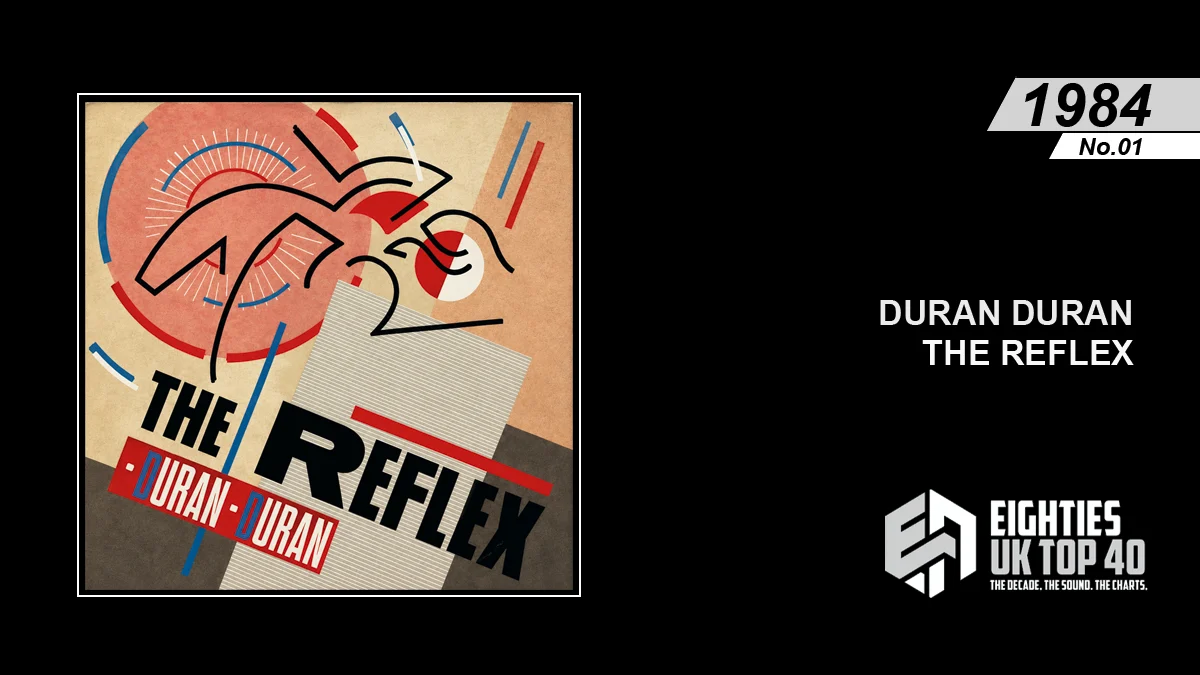
Eighties Archive Song Number
Highest Chart Position
Date Released
Date Of UK Top 40 Entry
Genre
Label
Catalogue Number
Story Behind The Song
Released in 1984, “The Reflex” was one of Duran Duran’s biggest and most ambitious singles, taken from their third studio album, Seven And The Ragged Tiger. Written by Simon Le Bon, Nick Rhodes, John Taylor, Roger Taylor and Andy Taylor, the song was transformed into a worldwide hit through a distinctive remix by producer Nile Rodgers. His innovative production reshaped the original recording, adding new rhythmic elements and a sharper dance-oriented sound that became one of the defining records of the decade.
The lyrics are deliberately abstract, exploring instinctive behaviour, temptation and emotional uncertainty rather than following a straightforward narrative. Simon Le Bon’s energetic vocal performance is supported by John Taylor’s driving bass, Andy Taylor’s powerful guitar work, Nick Rhodes’ colourful synthesisers and Roger Taylor’s dynamic drumming. Nile Rodgers’ production brings every element together with crisp percussion, layered textures and an infectious groove, creating a bold, polished sound that perfectly reflected the excitement of mid-1980s pop.
“The Reflex” reinforced Duran Duran’s position as one of the world’s most successful bands, combining adventurous songwriting with cutting-edge production and striking visual style. The accompanying music video, filmed during a live performance, captured the excitement surrounding the group at the height of their fame and became another favourite on music television. Today, the song is regarded as one of Duran Duran’s defining recordings, celebrated for its unforgettable chorus, innovative production and irresistible energy. It remains a staple of the band’s live shows and one of the standout pop singles of the 1980s.
The song peaked at No. 01 in the UK singles chart on 5th May 1984.
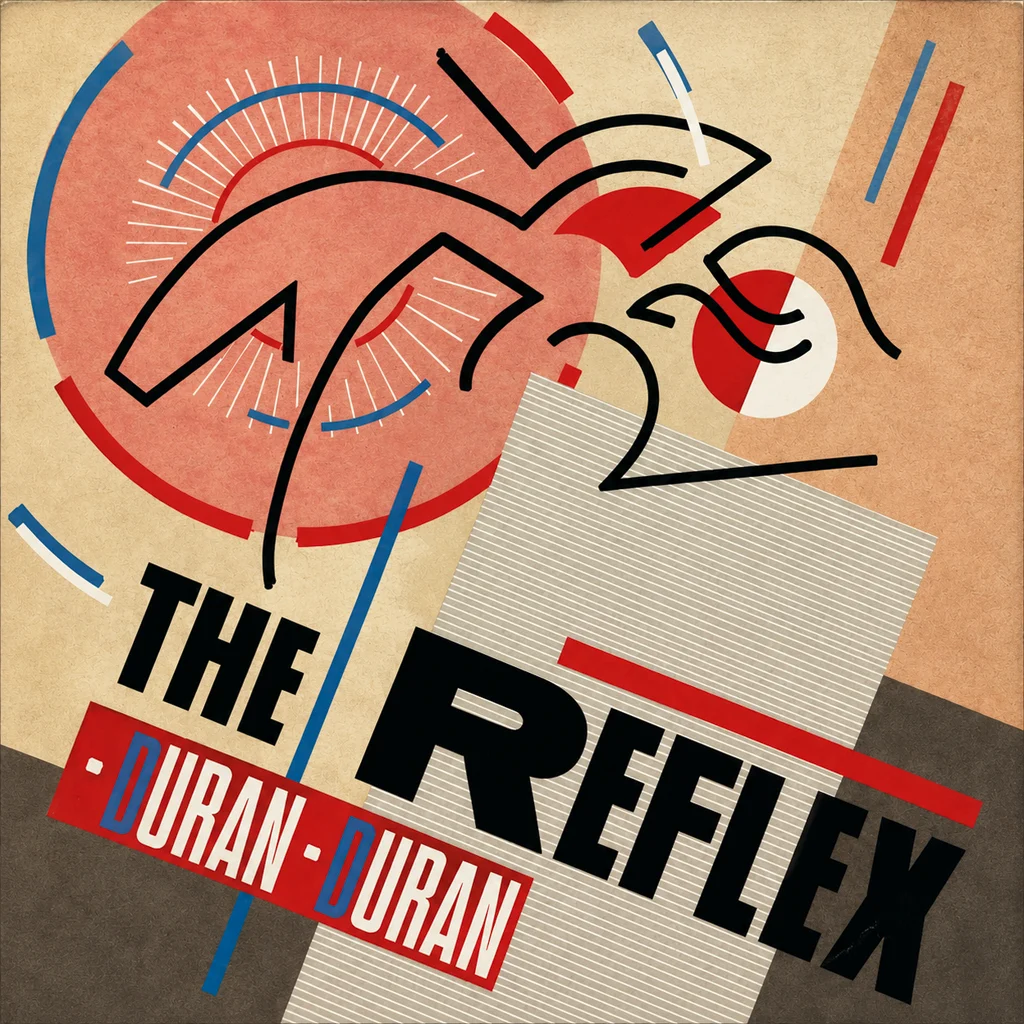
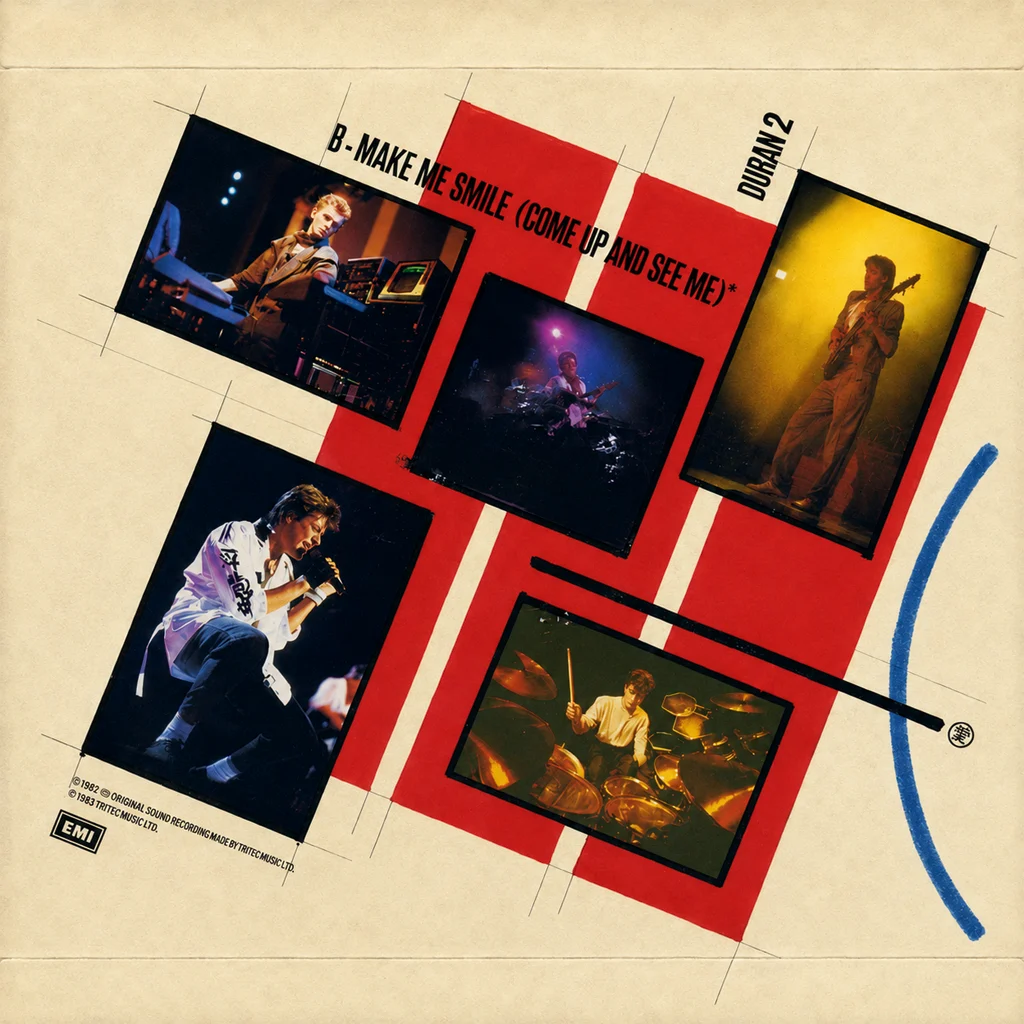
UK 7'' SLEEVE COVERS
Shown below are the picture sleeve covers (front and back) for the UK release of this single. If no cover sleeve was issued in the UK, we will display another country’s picture sleeve.
UK 7'' TRACK LISTING
| A-Side |
The Reflex (4:26)
(Duran Duran)
Produced Alex Sadkin, Ian Little, Duran Duran
|
| B-Side |
Make Me Smile (Come Up And See Me) (Live) (4:30)
(Steve Harley)
Produced By Ian Little
|
CHART PERFORMANCE (80s Chart only)
| UK Top 40 Chart Run [11 Weeks] – 28th April 1984 – 7th July 1984 |
OFFICIALLY RELEASED VERSIONS
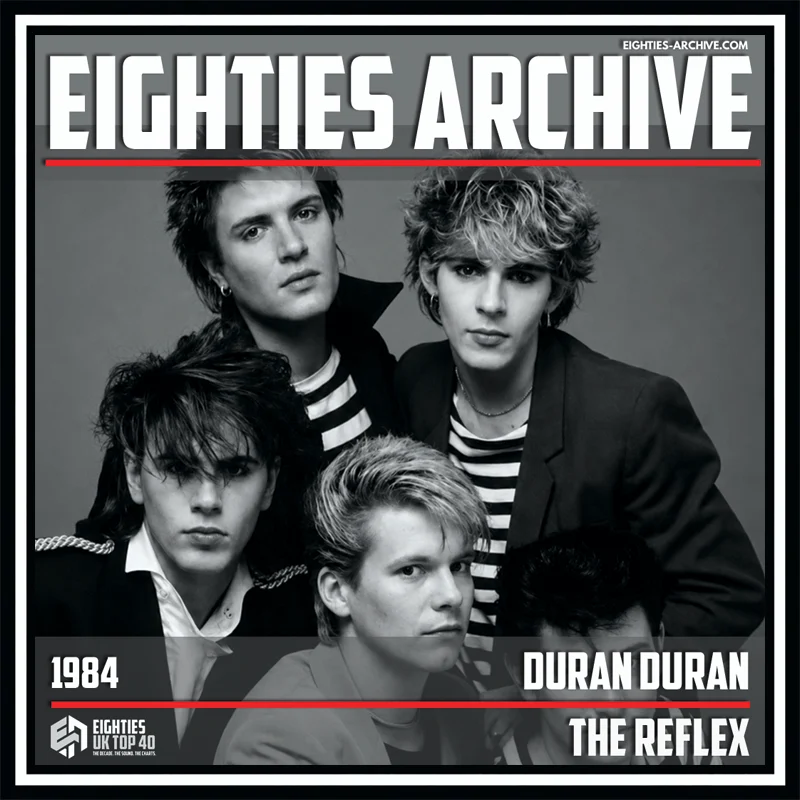
All officially released versions that appeared in the 80s:-
- The Reflex (Single Version) (4:26)
- The Reflex (Dance Mix) (6:34)
- The Reflex (Album Version) (5:29)
To hear the FULL version of the songs below, you will need an active Spotify account (Free one). Just log in on your desktop/tablet or phone to hear the FULL versions.
OFFICIAL VIDEO
SONG LYRICS
The reflex
The reflex
The reflex
The reflex-fle-fle-fle-fle-flex
You’ve gone too far this time
And I’m dancing on the valentine
I tell you somebody’s fooling around
With my chances on the danger line
I’ll cross that bridge when I find it
Another day to make my stand, oh whoa
High time is no time for deciding
If I should find a helping hand, oh whoa
Oh, why don’t you use it?
Try not to bruise it
Buy time, don’t lose it
Oh, why don’t you use it?
Try not to bruise it
Buy time, don’t lose it
The reflex is a lonely child who’s waiting by the park
The reflex is in charge of finding treasure in the dark
And watching over lucky clover, isn’t that bizarre?
And every little thing the reflex does
Leaves you answered with a question mark
I’m on a ride, and I want to get off
But they won’t slow down the roundabout
I sold the Renoir and TV set
Don’t wanna be around when this gets out
So, why don’t you use it?
Try not to bruise it
Buy time, don’t lose it
Why-y-y-y-y why why why-y-y (Yeah)
Why-y-y-y-y why why why-y-y (Yeah)
Why-y-y-y-y don’t you use it?
The reflex is a lonely child, he’s waiting in the park
The reflex is in charge of finding treasure in the dark
And watching over lucky clover, isn’t that bizarre?
And every little thing the reflex does
Leaves an answer with a question mark
Fle-Flex
So, why-y-y-y-y don’t you use it?
Try not to bruise it
Buy time, don’t lose it
The reflex is a lonely child who’s waiting by the park
The reflex is in charge of finding treasure in the dark
And watching over lucky clover, isn’t that bizarre?
And every little thing the reflex does
Leaves me answered with a question mark
Oh, the reflex, what a game, he’s hiding all the cards
The reflex is in charge of finding treasure…
Written by Duran Duran
1 Comment
Hello All
Have we made any mistakes in this posting? Feel free to let us know (we’d appreciate it!)
Regards
Admin