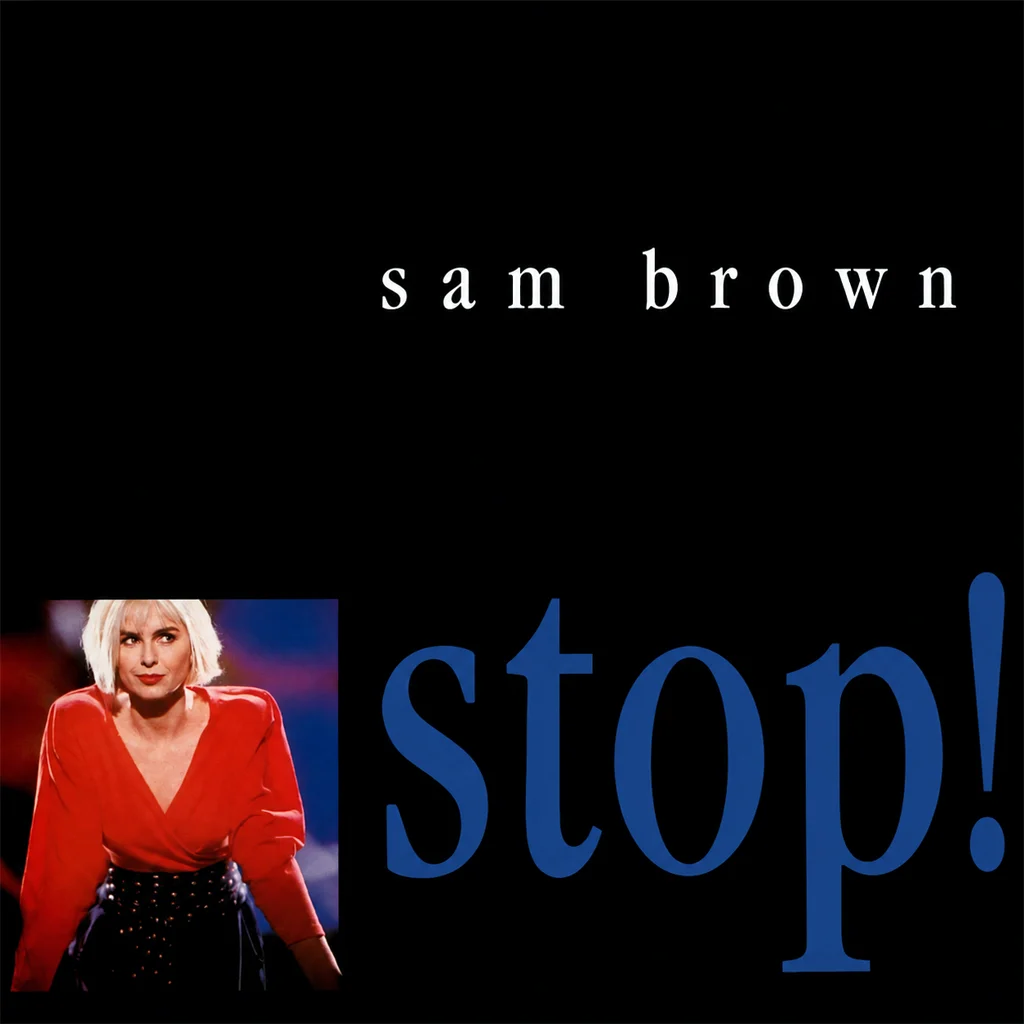
The arrival of Sam Brown’s “Stop!” in the late 1980s felt like a sudden, soulful interruption to the glossy, synthesiser-heavy landscape of the era. Released as the title track of her debut album in 1988, the song did more than just climb the charts; it introduced a voice of such raw, uncompromising power that it seemed to belong to a different timeline entirely. “Stop!” is a song that functions as a slow-burn emotional explosion, a masterclass in the blues-pop crossover that managed to feel both intimately small and operatically vast. It is a track defined by its restraint, its sudden bursts of gravelly intensity, and a sense of heartbreak so palpable that it remains one of the most evocative torch songs of the modern age.
At the heart of the song’s success is Sam Brown’s extraordinary vocal performance. The daughter of rock ‘n’ roll pioneer Joe Brown and session singer Vicki Brown, Sam possessed a pedigree that suggested a deep understanding of musical heritage, yet “Stop!” was entirely her own. The song begins with a deceptively simple, bluesy piano riff and a steady, rhythmic pulse that mirrors a heartbeat. When Brown enters, her voice is initially hushed, almost a whisper, conveying a weary vulnerability. She sings of a relationship teetering on the edge of collapse, capturing that agonizing moment of clarity where one partner realizes the other is no longer fully present. The lyricism is direct and unadorned, which only serves to heighten the emotional stakes; there are no metaphors to hide behind here.
The brilliance of the composition lies in its gradual escalation. As the song progresses, the arrangement swells, introducing soulful backing vocals and a swelling organ that anchor the track in the traditions of Memphis soul and gospel. However, it is the bridge and the final choruses where Brown truly unleashes her range. The transition from the controlled, jazz-inflected verses to the guttural, soaring cries of the climax is nothing short of breathtaking. When she bellows the title—a command that is simultaneously a plea and an ultimatum—the listener feels the sheer weight of her desperation. It is a rare example of a “big” vocal performance that never feels performative; every crack and growl in her voice feels earned by the narrative of the song.
Musically, “Stop!” was a daring anomaly for 1988. While the airwaves were dominated by the high-energy dance-pop of Stock Aitken Waterman or the polished rock of Def Leppard, Brown’s hit was atmospheric, smoky, and drenched in a late-night noir aesthetic. The production, handled by her brother Pete Brown, eschewed the trendy digital reverbs of the day in favour of a warm, organic sound that allowed the nuances of the instrumentation to breathe. The guitar solo, brief but biting, adds a layer of rock grit that prevents the song from leaning too far into cabaret territory. This sonic timelessness is exactly why the song has refused to age. It doesn’t sound like “the eighties”; it sounds like the universal experience of a heart breaking in real-time.
The song’s journey to the top was as dramatic as the track itself. Initially released to modest interest, it became a massive hit in the Netherlands and Germany before finally conquering the UK charts upon its re-release in 1989. It eventually reached number four, but its cultural footprint was far larger than its peak position might suggest. It became a staple of singing competitions and a benchmark for vocalists worldwide, though few have ever managed to replicate the specific blend of technical precision and soul-baring honesty that Brown brought to the original. It was a song that demanded attention, forcing the listener to pause—to stop—and reckon with the sheer force of a human voice at its limit.
Beyond its commercial success, “Stop!” solidified Sam Brown’s reputation as a musician’s musician. In the years following, she would become one of the most sought-after collaborators in the industry, working with everyone from Pink Floyd to George Harrison. Yet, “Stop!” remains her definitive statement. It is a song about the dignity found in honesty, even when that honesty is painful. It speaks to the universal desire for a partner to “be a man” or simply be truthful, highlighting the exhaustion that comes from emotional ambiguity. The way the song ends—fading out on a series of haunting, improvised vocal runs—leaves the listener with the impression that the emotional turmoil hasn’t truly ended; it has simply moved beyond the reach of the microphone.
Today, “Stop!” stands as a pillar of British soul-pop. It serves as a reminder that amidst the ever-changing tides of technology and fashion, there is no substitute for a great song performed with genuine conviction. It is a track that can fill a stadium or haunt a bedroom, equally effective in both settings because its core truth is so undeniable. Sam Brown didn’t just record a hit; she captured a lightning strike of emotional catharsis that continues to resonate with anyone who has ever felt the sting of a love that is no longer being returned. It is three minutes and fifty-eight seconds of pure, unadulterated soul.
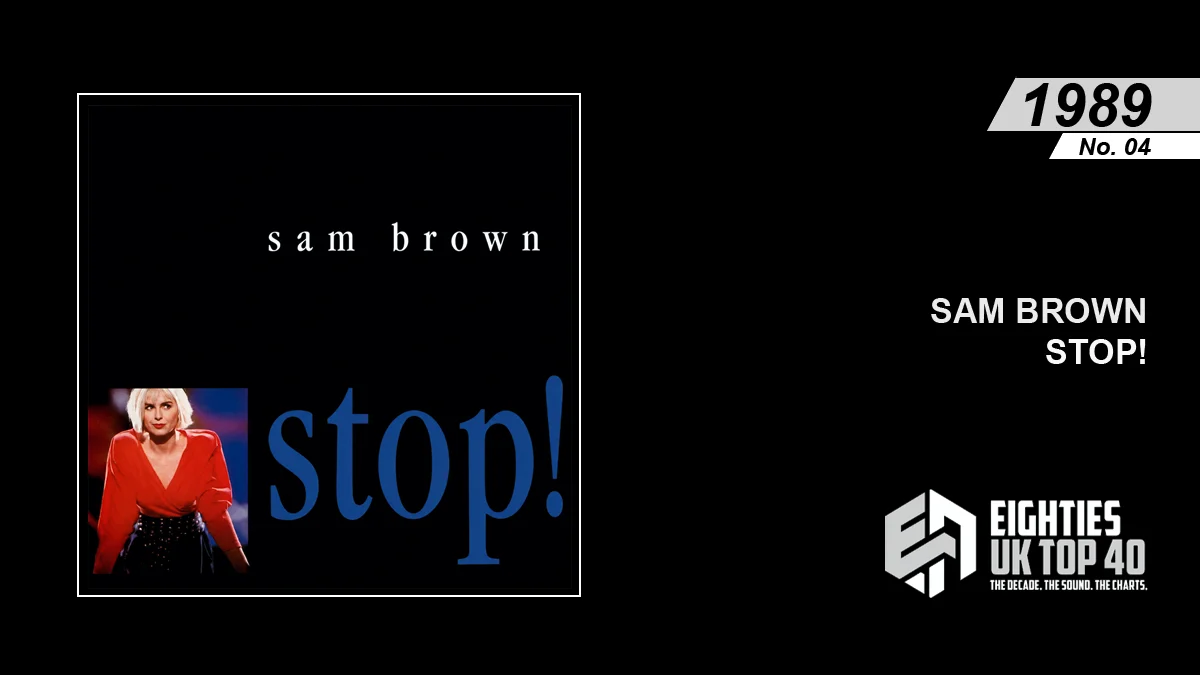
The song peaked at No. 04 in the UK charts on 4th March 1989.

Lyrics
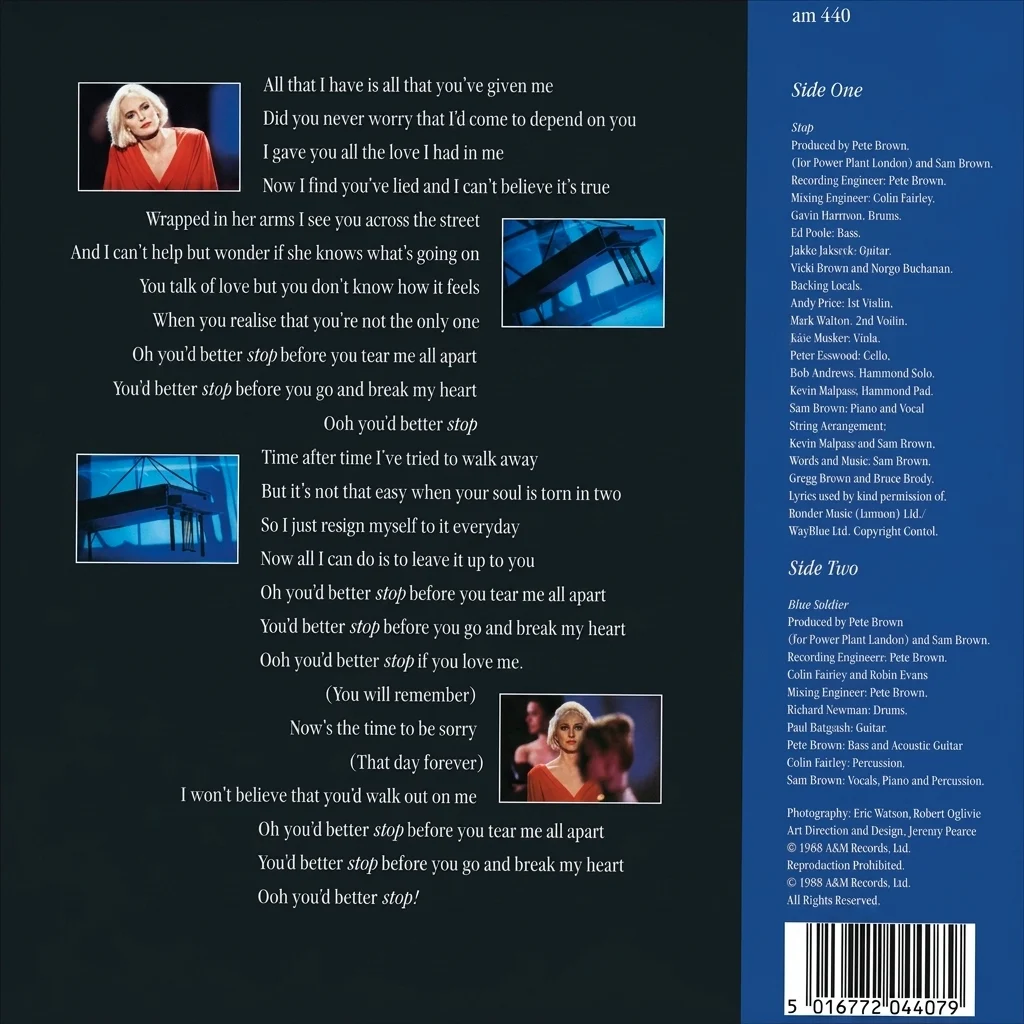
All that I have is all that you’ve given me
Did you ever worry that I’d come to depend on you
I gave you all the love I had in me
Now I find you’ve lied and I can’t believe it’s true
Wrapped in her arms I see you across the street
And I can’t help but wonder if she knows what’s going on
You talk of love but you don’t know how it feels
When you realize that you’re not the only one
Oh you’d better stop before you tear me all apart
You’d better stop before you go and break my heart
Ooh you’d better stop
Time after time I’ve tried to walk away
But it’s not that easy when your soul is torn in two
So I just resign myself to it every day
Now all I can do is to leave it up to you
Oh you’d better stop before you tear me all apart
You’d better stop before you go and break my heart
Ooh you’d better stop
Stop if love me
(you will remember)
Now’s the time to be sorry
(that day forever)
I won’t believe that you’d walk out on me
Oh you’d better stop before you tear me all apart
You’d better stop before you go and break my heart
Ooh you’d better stop
Written By Gregg W. Sutton, Samantha Brown, Bruce Bennett Brody