

The mid-1980s was a period of sonic transition, a bridge between the neon-soaked synth-pop of the decade’s start and the muscular, guitar-driven alternative rock that would soon take over the airwaves. In the midst of this shifting landscape, the Scottish band Hipsway emerged with a track that felt both timeless and hyper-specific to its moment.
Released in early 1986, “The Honeythief” was more than just a hit; it was a masterclass in atmospheric production, rhythmic precision, and enigmatic storytelling. It captured a certain moody, late-night sophistication that few of its contemporaries could replicate, cementing its place as an enduring cult classic of the New Wave era.
At the heart of “The Honeythief” is a relentless, infectious groove. The song opens with a tight, funky bassline that provides the skeleton for everything that follows. It is a quintessentially British take on American soul and funk, filtered through the grey, rainy lens of Glasgow. The interplay between the bass and the crisp, gated-reverb drums creates a sense of forward motion that is impossible to ignore. Yet, despite its danceable pulse, there is a pervasive coolness to the track—a sleek, detached elegance. The guitars don’t scream; they chime and scratch, punctuating the rhythm with staccato bursts that feel like light reflecting off wet pavement. This instrumental restraint is what allows the song to breathe, creating a spaciousness that was often missing from the cluttered, over-produced pop of the mid-80s.
Grahame Skinner’s vocals are the song’s defining feature. Possessing a rich, baritone depth that recalls the likes of Jim Morrison or Bryan Ferry, Skinner brings a sense of gravity and mystery to the lyrics. He doesn’t just sing the melody; he inhabits it with a charismatic, slightly dangerous swagger. When he delivers the central hook, there is a mixture of accusation and allure that keeps the listener off-balance. The lyrics themselves are famously cryptic, centering on the titular “honeythief”—a figure who represents betrayal, emotional theft, or perhaps the fleeting nature of desire itself. The metaphor of the honeythief is evocative and tactile, suggesting something sweet that has been illicitly taken, leaving behind a sense of loss and bitterness. It’s a song about the aftermath of a transgression, told with a level of lyrical abstraction that allows the listener to project their own experiences onto the narrative.
The production of the track, handled by Paul Hardiman, is a testament to the era’s technical sophistication. It utilizes the technology of 1986—the Fairlight CMI, the digital delays, the precise layering—without falling into the trap of sounding dated or plastic. There is a “wetness” to the sound, a heavy use of echo and reverb that gives the song a cinematic quality. It sounds like the soundtrack to a stylish noir film set in a world of high-collared coats and dimly lit clubs. The backing vocals, often overlooked, provide a shimmering counterpoint to Skinner’s lead, adding a layer of soulfulness that softens the song’s sharper edges. Everything about the arrangement feels deliberate, from the sudden pauses that highlight the bass to the way the keyboard textures swell and recede like a tide.
“The Honeythief” achieved significant success, reaching the top twenty in the UK and even cracking the American Billboard Hot 100, a rare feat for a Scottish indie-adjacent band of that period. Its success was driven in part by a striking music video that mirrored the song’s aesthetic: high-contrast lighting, stylish silhouettes, and a sense of restless urban energy. It fit perfectly into the MTV era, offering a more mature, refined alternative to the hair metal and bubblegum pop that dominated the charts. For a brief moment, Hipsway seemed poised to become global superstars, heirs to the throne of sophisticated pop-rock.
However, the enduring power of “The Honeythief” lies not in its chart positions, but in its ability to evoke a specific mood. It is a song of the “blue hour,” that time between sunset and total darkness when the world feels full of possibility and peril. It bridges the gap between the art-school ambitions of post-punk and the commercial polish of the mainstream. Decades later, it remains a staple of alternative radio and “best of the 80s” playlists, not because of nostalgia alone, but because the craftsmanship is so undeniable. It is a song that hasn’t aged so much as it has matured, its sleek surfaces still gleaming, its central mystery still unsolved. It remains a perfect distillation of a particular creative spark—a moment when rhythm, melody, and a baritone growl aligned to create something truly magnetic.
The song peaked at No. 17 in the UK charts on 22nd March 1986.

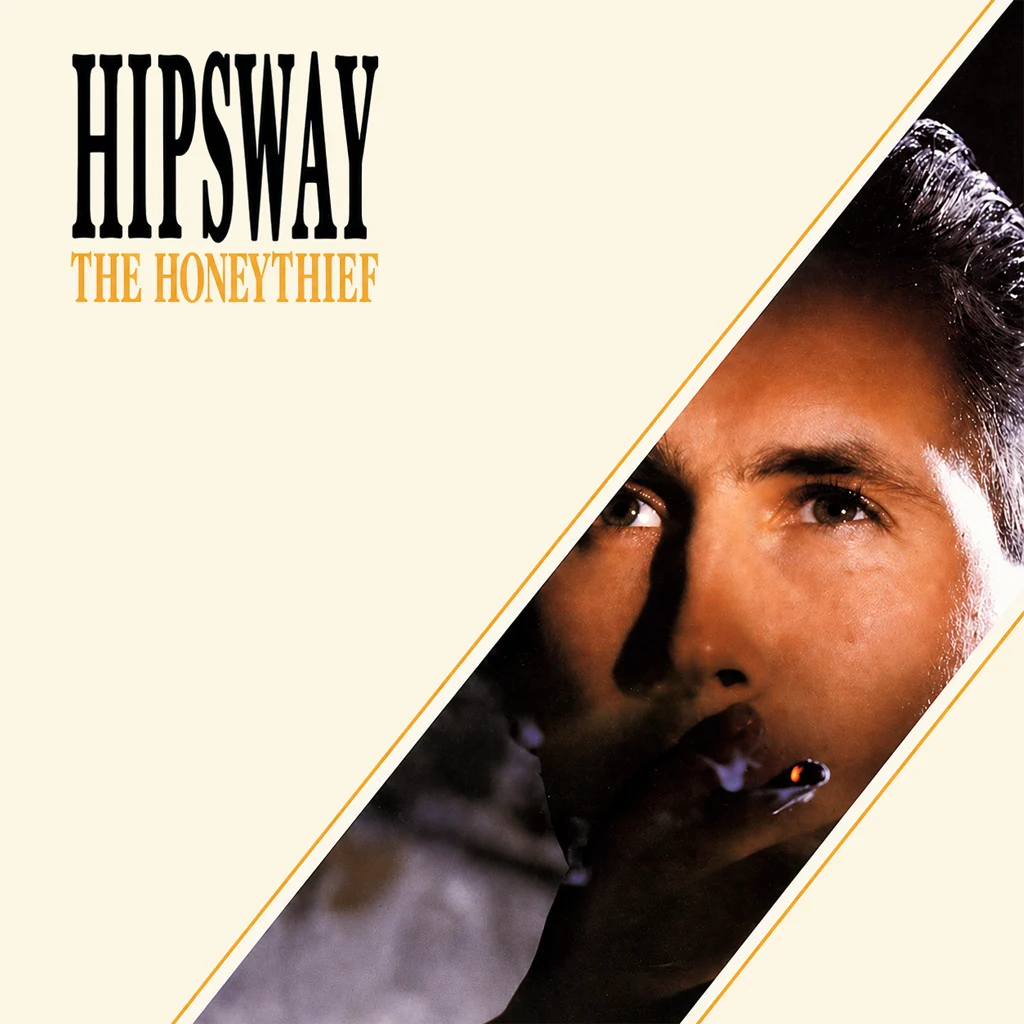
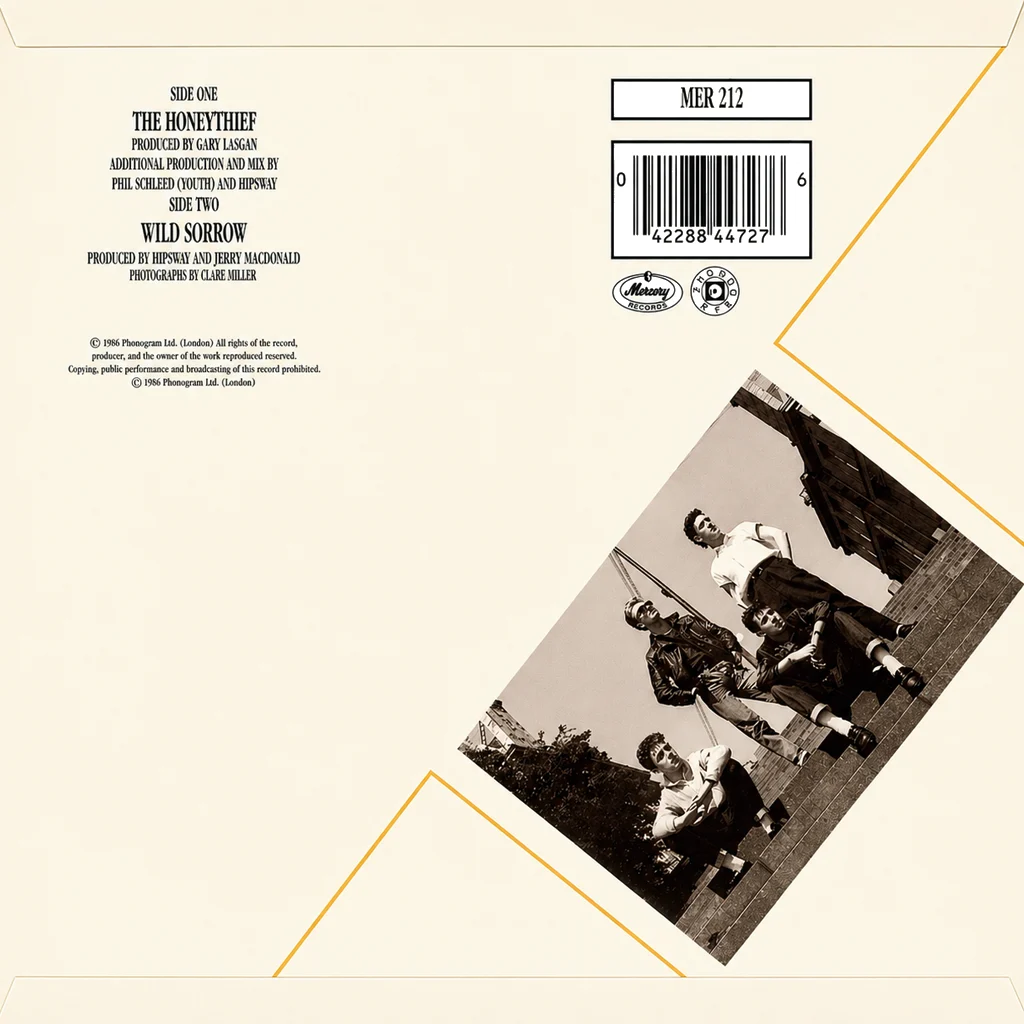
| A-Side | The Honeythief (3:12) (McElhone, McLeod, Skinner, Travers) Produced By Gary Langan |
| B-Side | Wild Sorrow (4:14) (Jones, McElhone, Skinner, Travers) Produced By Hipsway, Kenny MacDonald) |
| UK Top 40 Chart Run [6 Weeks] – 8th March 1986 – 12th April 1986 |
Officially Released Versions
The Honeythief (Single Version) (3:12)
The Honeythief (Extended Version) (4:10)
The Honeythief (Galus Mix) (4:40)
Lyrics
Sleek, big cat
Bible black
Honeysuckle
I would never deny
Well, the light of deep regret
Let me see what I don’t get
The light of deep regret
Let me see what I don’t get
Pass through the heat
Come on, come on and pass
Through the heat
Catch a thief
A honeythief
I am a thief
A honeythief
Oh, yeah
The light of deep regret
Let me see what I don’t get
The light of deep regret
Let me see what I don’t get
That’s the price you pay
When love gets in the way
Stealth in the night
I come to steal
With stealth in the night
You got the sugar to satisfy
I am the man you can never deny
Well, the light of deep regret
Let me see what I don’t get
The light of deep regret
Let me see what I don’t get
The honeythief
The honeythief
I don’t get
The honeythief
I don’t get
The honeythief
The light of deep regret
Let me see what I don’t get
The light of deep regret
Let me see what I don’t get
The light of deep regret
Let me see what I don’t get
The light of deep regret
Let me see what I don’t get
The light of deep regret
Let me see what I don’t get
The light of deep regret
Let me see what I don’t get
The light of deep regret
Let me see what I don’t get
The light of deep regret
Let me see what I don’t get
Written By McElhone, McLeod, Skinner, Travers
You can listen to the tracks below on Spotify. If you have a paid Spotify account, log in, to listen to all tracks (complete). If you do not have a paid Spotify account, you can only listen to a 30-second sample of each track.

Song Number – 0002
Hipsway
The Honeythief

Date Released
7th February 1986
Highest Chart Position
No. 17
Genre
Electronic, SynthPop, Pop
Date Of UK Top 40 Entry
8th March 1986
Label
Mercury
Catalogue Number
MER 212
About eighties archive

We hope this will be your one stop shop for enjoying your Eighties music nights. There are over 3,500 chart entries to add to this site, so call in often, as we will be adding entries every day. We will be adding more features to the site as time goes on. But for now, enjoy!