
Eighties Archive Song Number
Highest Chart Position
Date Released
Date Of UK Top 40 Entry
Genre
Label
Catalogue Number
Story Behind The Song
Released in 1984, “Robert De Niro’s Waiting” was one of the standout singles from Bananarama’s self-titled second album. Written by Sara Dallin, Siobhan Fahey, Keren Woodward and the production team of Steve Jolley and Tony Swain, the song showcased the group’s ability to combine infectious pop melodies with more serious lyrical themes. Its polished production and memorable chorus helped reinforce Bananarama’s growing reputation as one of Britain’s leading female pop acts.
Despite its playful title, the song tells the story of a young woman who spends much of her time alone, seeking escape through fantasy while living in fear of an abusive and threatening environment. The repeated references to Hollywood actor Robert De Niro represent an imagined protector rather than a romantic obsession. Sara Dallin, Siobhan Fahey and Keren Woodward deliver the lyrics with a cool, understated vocal style, while shimmering synthesisers, driving percussion and layered harmonies create an irresistible pop sound that contrasts with the song’s darker subject matter.
“Robert De Niro’s Waiting” demonstrated that Bananarama were capable of tackling meaningful issues without sacrificing their commercial appeal. It became one of the defining songs of their early career and helped establish the trio as accomplished songwriters as well as charismatic performers. Today, the track is regarded as one of the band’s finest recordings, admired for its intelligent lyrics, memorable melody and polished production. It remains a favourite among fans and stands as a reminder that some of the brightest pop songs of the 1980s often carried surprisingly thoughtful messages beneath the surface.
The song peaked at No. 03 in the UK charts on the 31st March 1984.
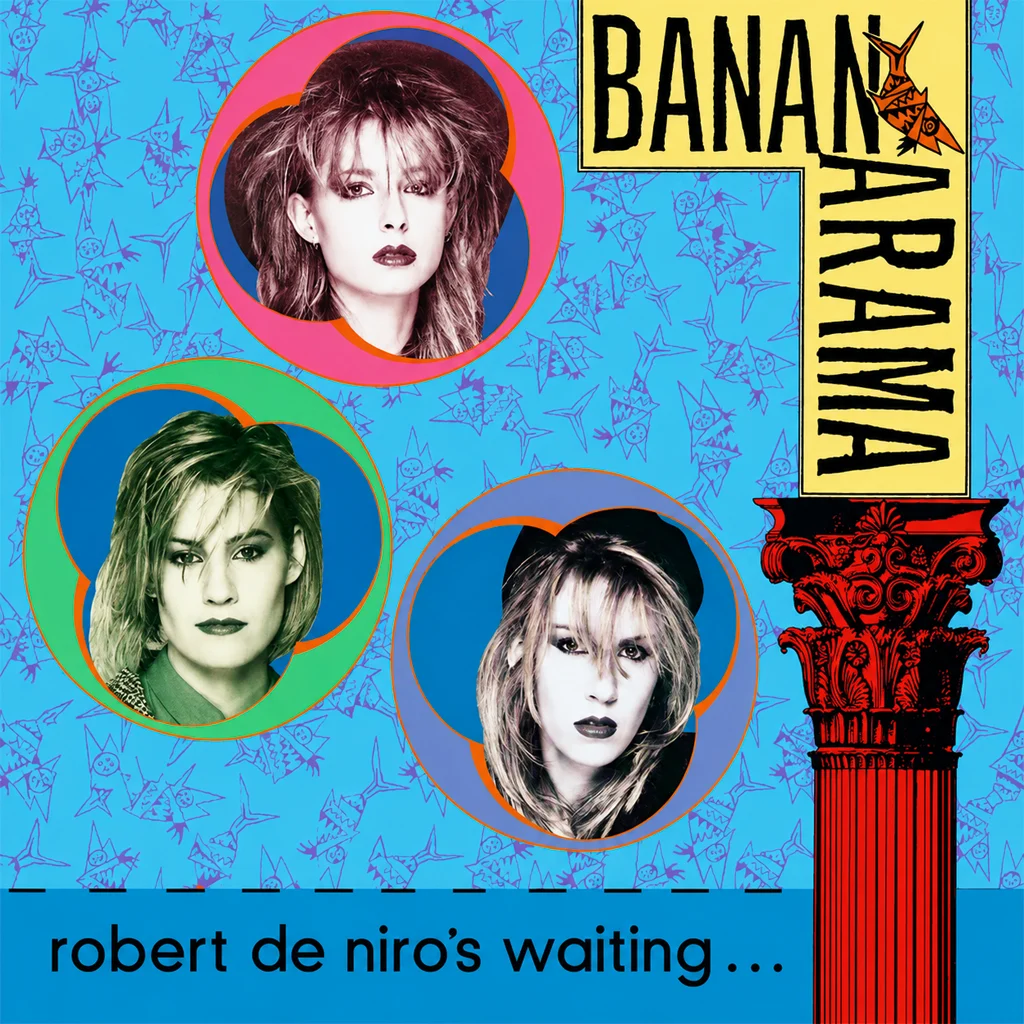
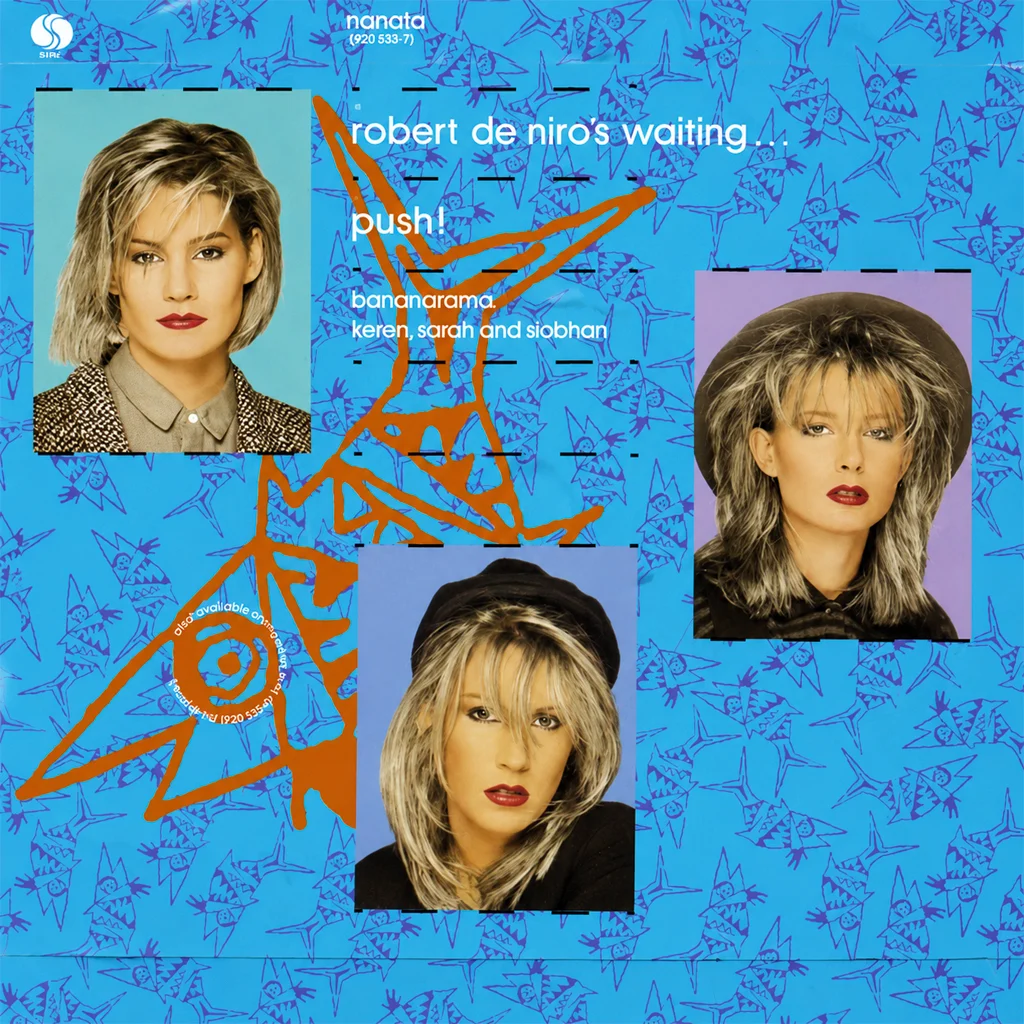
UK 7'' SLEEVE COVERS
Shown below are the picture sleeve covers (front and back) for the UK release of this single. If no cover sleeve was issued in the UK, we will display another country’s picture sleeve.
UK 7'' TRACK LISTING
| A-Side | Robert De Niro’s Waiting (3:29) (Dallin, Fahey, Woodward, Jolley, Swain) Produced By Steve Jolley, Tony Swain |
| B-Side | Push! (4:06) (Dallin, Fahey, Woodward, Jolley, Swain) Produced By Steve Jolley, Tony Swain |
CHART PERFORMANCE (80s Chart only)
| UK Top 40 Chart Run [9 Weeks] – 10th March 1984 – 5th May 1984 |
OFFICIALLY RELEASED VERSIONS
All officially released versions that appeared in the 80s:-
- Robert De Niro’s Waiting (Single Version) (3:29)
- Robert De Niro’s Waiting (Extended Version) (5:42)
- Robert De Niro’s Waiting (Instrumental) (3:44)
To hear the FULL version of the songs below, you will need an active Spotify account (Free one). Just log in on your desktop/tablet or phone to hear the FULL versions.
OFFICIAL VIDEO
SONG LYRICS
Hopes dashed to the floor
Like shattered teenage dreams
Boys living next door
Are never what they seem
A walk in the park can become a bad dream
People are staring and following me
This is my only escape from it all
Watching a film or a face on the wall
Robert De Niro’s waiting
Talking Italian
Robert De Niro’s waiting
Talking Italian
Robert De Niro’s waiting
Talking Italian
(Talking Italian)
Robert De Niro’s waiting
I don’t need a boy
I’ve got a man of steel
Don’t come any closer
I don’t wanna feel
You’re breathing, you’re touching, but nothing’s for free
I never want this to happen to me
Don’t try to change me, you’re wasting your time
Now I’ve got something much better in mind
Robert De Niro’s waiting
Talking Italian
Robert De Niro’s waiting
Talking Italian
Robert De Niro’s waiting
Talking Italian
(Talking Italian)
Robert De Niro’s waiting
A walk in the park can become a bad dream
People are staring and following me
This is my only escape from it all
Watching a film or a face on the wall
Robert De Niro’s waiting
Talking Italian
Robert De Niro’s waiting
Talking Italian
Robert De Niro’s waiting
Talking Italian
(Talking Italian)
Robert De Niro’s waiting
Written by Tony Swain, Keren Jane Woodward, Siobhan Maire Deirdre Fahey, Steven Jolley, Sarah Elizabeth Dallin
1 Comment
Hello All
Have we made any mistakes in this posting? Feel free to let us know (we’d appreciate it!)
Regards
Admin