
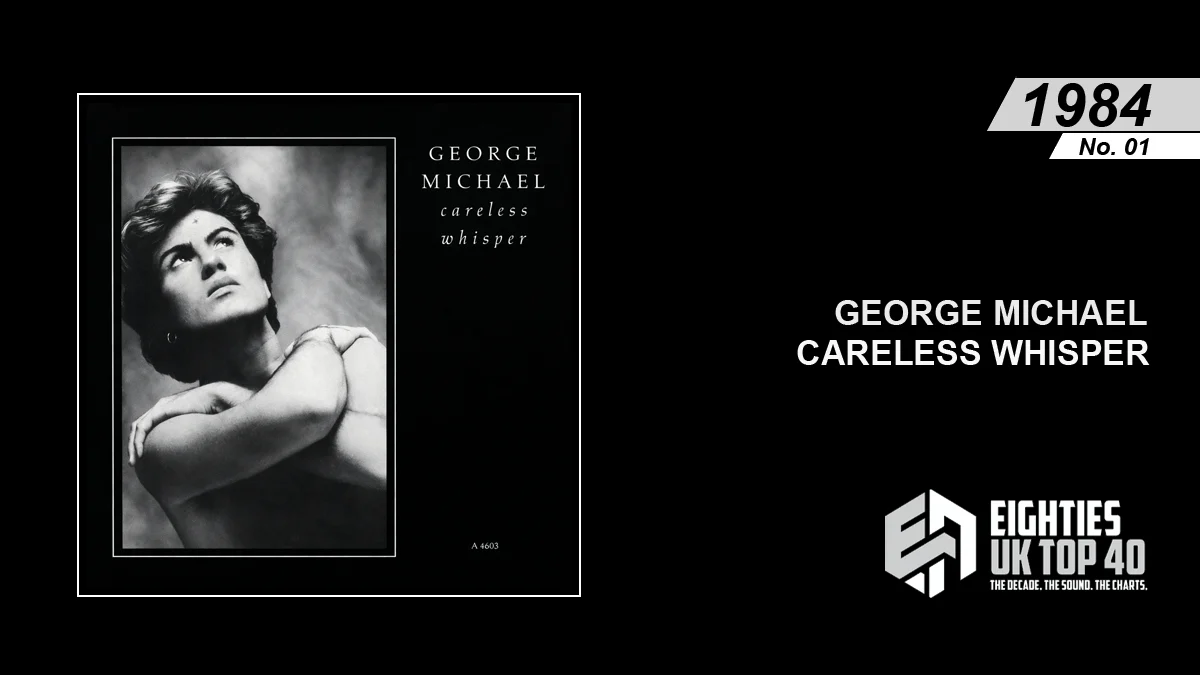
Eighties Archive Song Number
Highest Chart Position
Date Released
Date Of UK Top 40 Entry
Genre
Label
Catalogue Number
Story Behind The Song
Released in 1984, “Careless Whisper” became one of George Michael’s defining songs and marked the beginning of his emergence as a major solo artist while he was still a member of Wham! Co-written with Andrew Ridgeley, the song was included on Wham!’s Make It Big album in the UK, although its mature style clearly pointed towards the sophisticated direction George Michael would later pursue as a solo performer.
Built around one of the most recognisable saxophone introductions in pop music, “Careless Whisper” tells the story of guilt, regret and the consequences of infidelity. George Michael’s heartfelt vocal performance conveys both vulnerability and emotional honesty, while the elegant arrangement of gentle keyboards, subtle guitars and soulful instrumentation creates a timeless atmosphere. The combination of its unforgettable melody and deeply personal lyrics helped set it apart from the more upbeat pop songs dominating the charts during the mid-1980s.
The success of “Careless Whisper” confirmed George Michael as one of Britain’s most gifted songwriters and vocalists, demonstrating a level of maturity that would define the rest of his career. It remains one of his most enduring recordings and continues to receive regular radio airplay around the world. Today, the song is widely regarded as one of the greatest pop ballads of the decade, celebrated for its impeccable songwriting, flawless production and the emotional depth of George Michael’s remarkable vocal performance.
The song peaked at No. 01 on the UK charts on 18th August 1984.
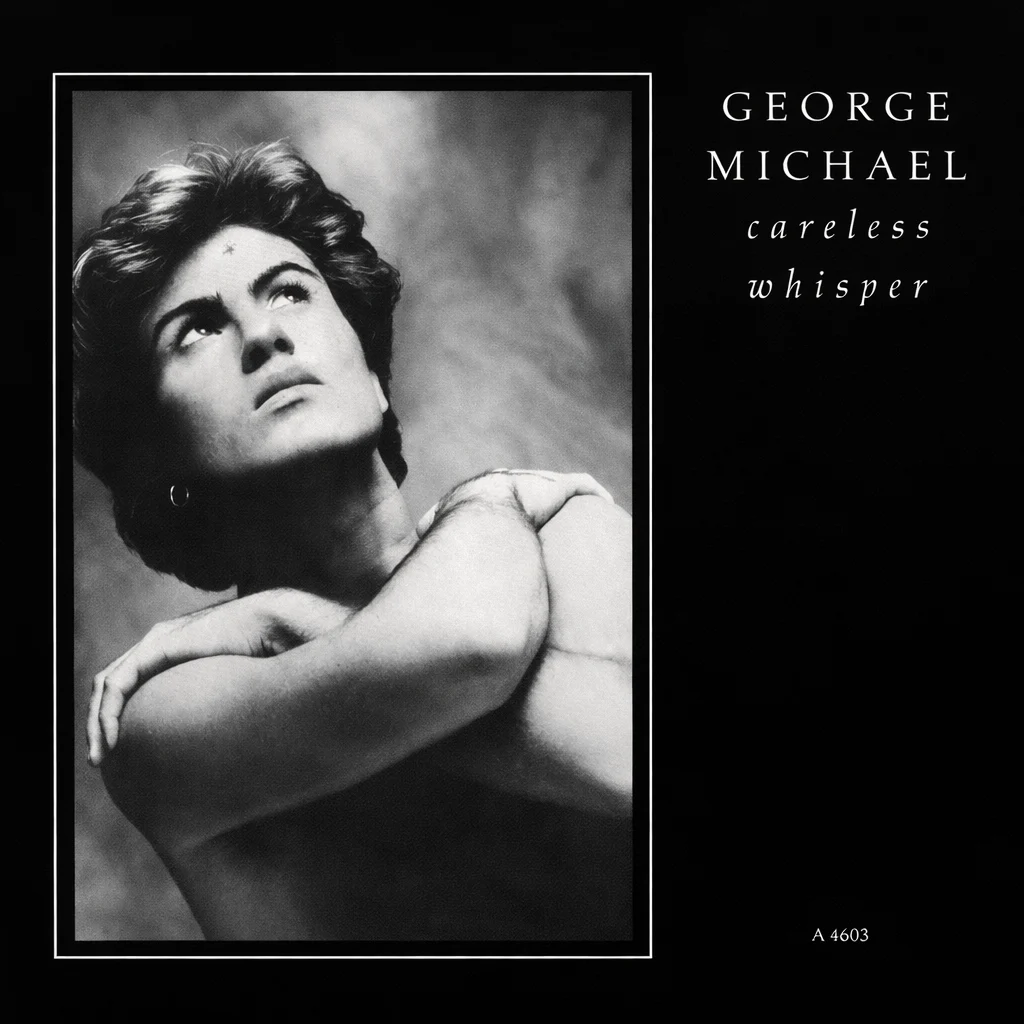
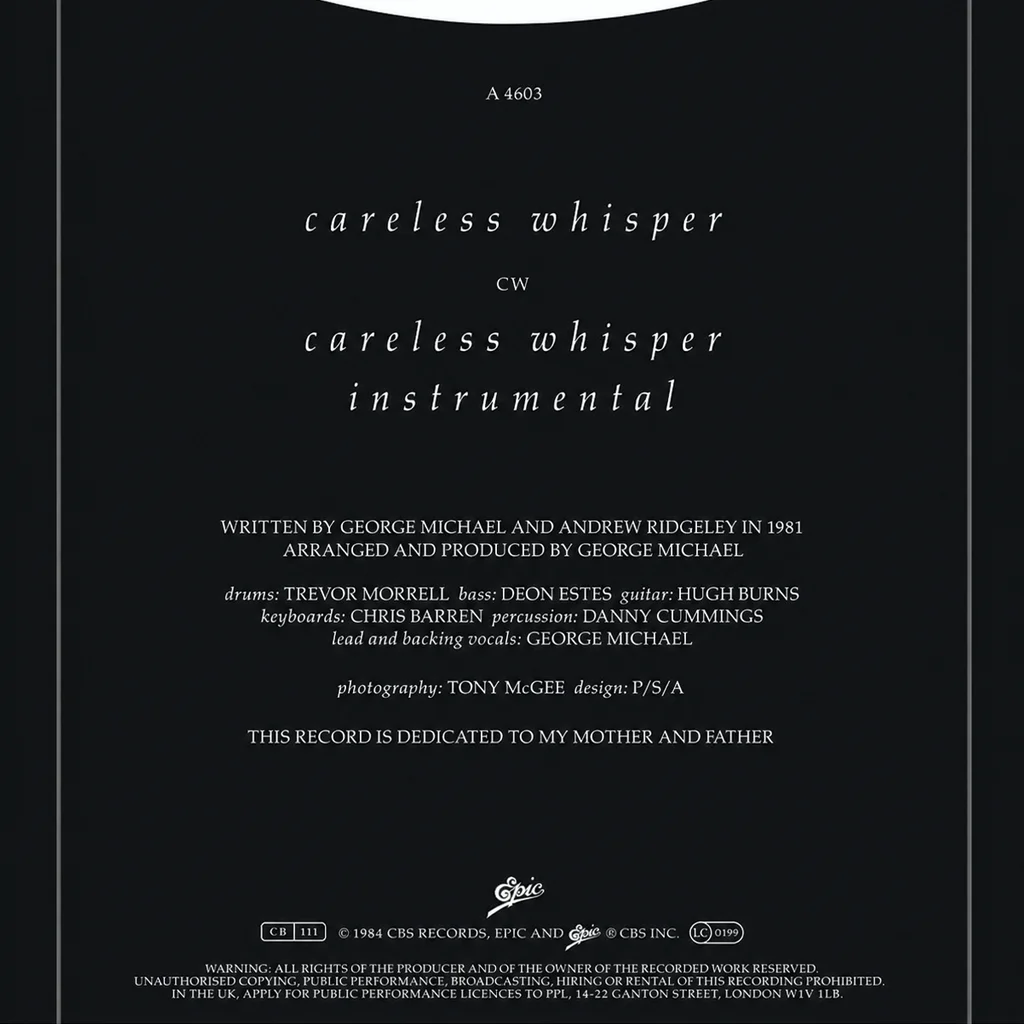
UK 7'' SLEEVE COVERS
Shown below are the picture sleeve covers (front and back) for the UK release of this single. If no cover sleeve was issued in the UK, we will display another country’s picture sleeve.
UK 7'' TRACK LISTING
| A-Side | Careless Whisper (5:00) (George Michael, Andrew Ridgeley) Produced By George Michael |
| B-Side | Careless Whisper (Instrumental) (5:04) (George Michael, Andrew Ridgeley) Produced By George Michael |
CHART PERFORMANCE (80s Chart only)
| UK Top 40 Chart Run [15 Weeks] – 4th August 1984 – 11th November 1984 |
OFFICIALLY RELEASED VERSIONS
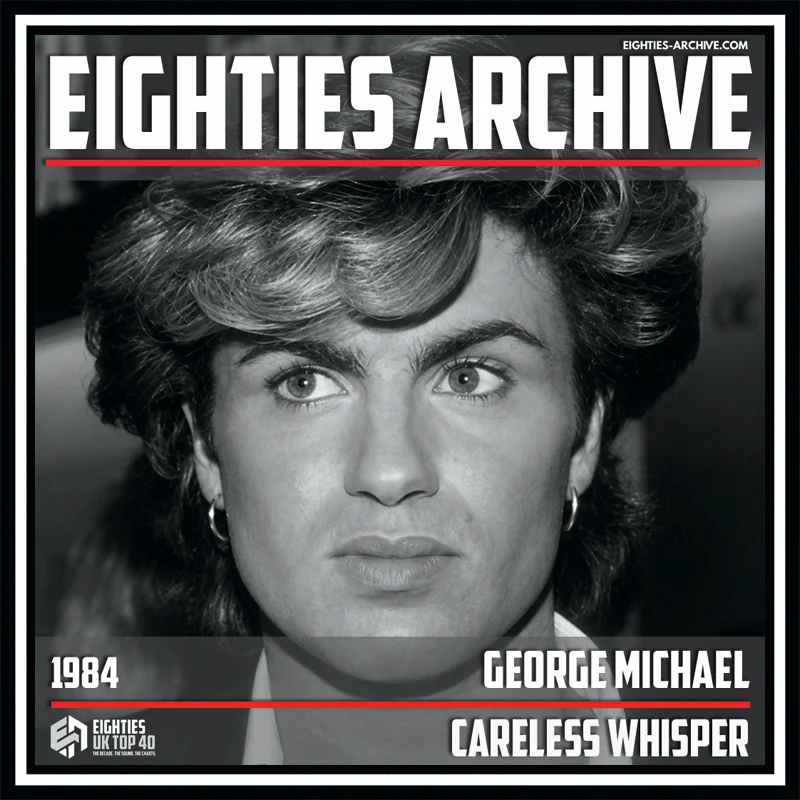
All officially released versions that appeared in the 80s:-
- Careless Whisper (Single Version) (5:00)
- Careless Whisper (Extended Mix) (6:30)
- Careless Whisper (Special Version) (5:34)
- Careless Whisper (Instrumental) (5:04)
To hear the FULL version of the songs below, you will need an active Spotify account (Free one). Just log in on your desktop/tablet or phone to hear the FULL versions.
OFFICIAL VIDEO
SONG LYRICS
Oh, woah, woah, oh
I feel so unsure
As I take your hand and lead you to the dance floor
As the music dies, something in your eyes
Calls to mind a silver screen and all its sad goodbyes
I’m never gonna dance again
Guilty feet have got no rhythm
Though it’s easy to pretend
I know you’re not a fool
I should have known better than to cheat a friend
And waste the chance that I’d been given
So I’m never gonna dance again
The way I danced with you, oh
Time can never mend
The careless whispers of a good friend
To the heart and mind, ignorance is kind
There’s no comfort in the truth, pain is all you’ll find
I’m never gonna dance again
Guilty feet have got no rhythm
Though it’s easy to pretend
I know you’re not a fool
I should have known better than to cheat a friend (Shoulda known better, yeah)
And waste the chance that I’d been given
So I’m never gonna dance again
The way I danced with you, oh
Never without your love
Tonight, the music seems so loud
I wish that we could lose this crowd
Maybe it’s better this way
We’d hurt each other with the things we want to say
We could have been so good together
We could have lived this dance forever
But now, who’s gonna dance with me?
Please stay
And I’m never gonna dance again
Guilty feet have got no rhythm
Though it’s easy to pretend
I know you’re not a fool
I should have known better than to cheat a friend
And waste the chance that I’d been given
So I’m never gonna dance again
The way I danced with you, oh
(Now that you’re gone) Now that you’re gone
(Now that you’re gone) Was what I did so wrong, so wrong
That you had to leave me alone?
Written By George Michael, Andrew Ridgeley
1 Comment
Hello All
Have we made any mistakes in this posting? Feel free to let us know (we’d appreciate it!)
Regards
Admin