
Eighties Archive Song Number
Highest Chart Position
Date Released
Date Of UK Top 40 Entry
Genre
Label
Catalogue Number
Story Behind The Song
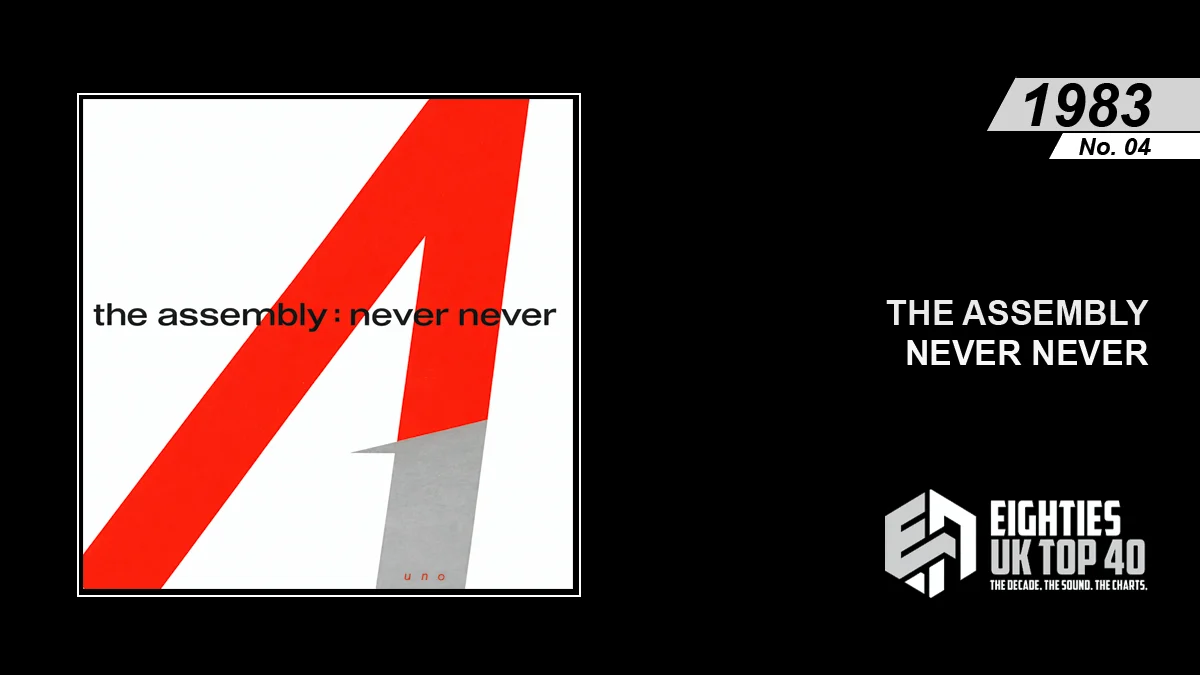
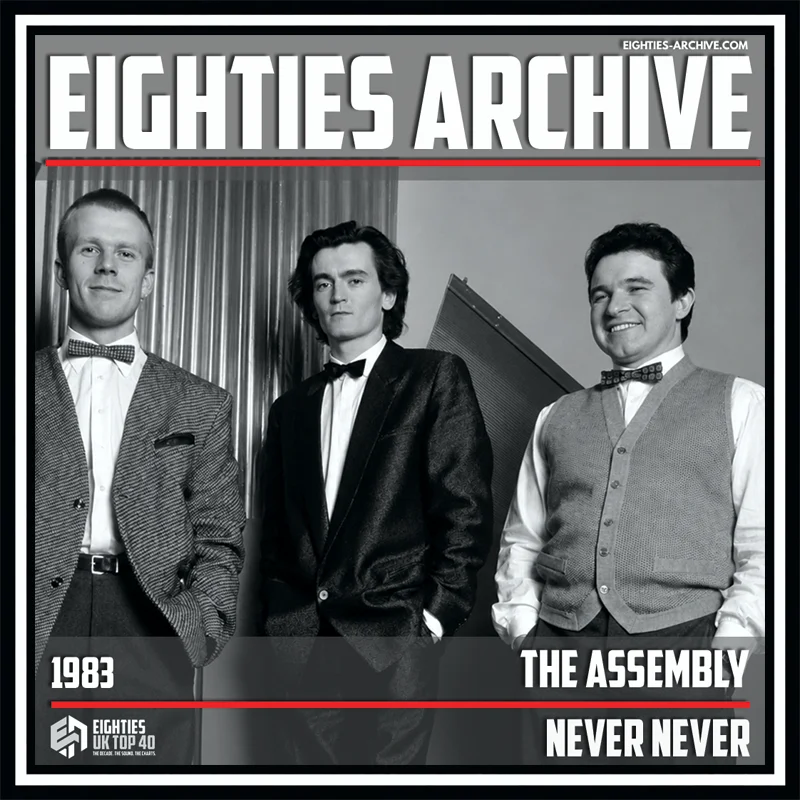
Released in 1983, “Never Never” was the only single issued by The Assembly, a short-lived project created by former Depeche Mode songwriter Vince Clarke and producer Eric Radcliffe. Rather than forming a conventional band, Clarke envisioned The Assembly as a collective that would feature a different guest vocalist on each release. For their debut single, they recruited Feargal Sharkey, whose distinctive voice proved the perfect complement to Clarke’s elegant electronic compositions.
“Never Never” is a sophisticated synth-pop ballad that explores themes of lost love, longing and emotional uncertainty. Sharkey’s unmistakable vocal performance adds warmth and vulnerability to the song, contrasting beautifully with Clarke’s shimmering synthesisers, subtle drum programming and atmospheric production. The track demonstrated Clarke’s growing confidence as a songwriter following his success with Depeche Mode and Yazoo, while hinting at the electronic sound he would later develop further with Erasure.
Although The Assembly never released the planned album and the project ended after just one single, “Never Never” remains a highly regarded recording among fans of 1980s synth-pop. Its polished production, memorable melody and heartfelt performance have ensured its lasting appeal, while the collaboration between Vince Clarke and Feargal Sharkey continues to be seen as one of the decade’s most intriguing musical partnerships. Today, the song stands as a reminder of Clarke’s remarkable ability to craft timeless electronic pop and of a project that, despite its brief lifespan, left a lasting impression on British pop music.
The song peaked at No. 04 on the UK Singles Chart on 26th November 1983.
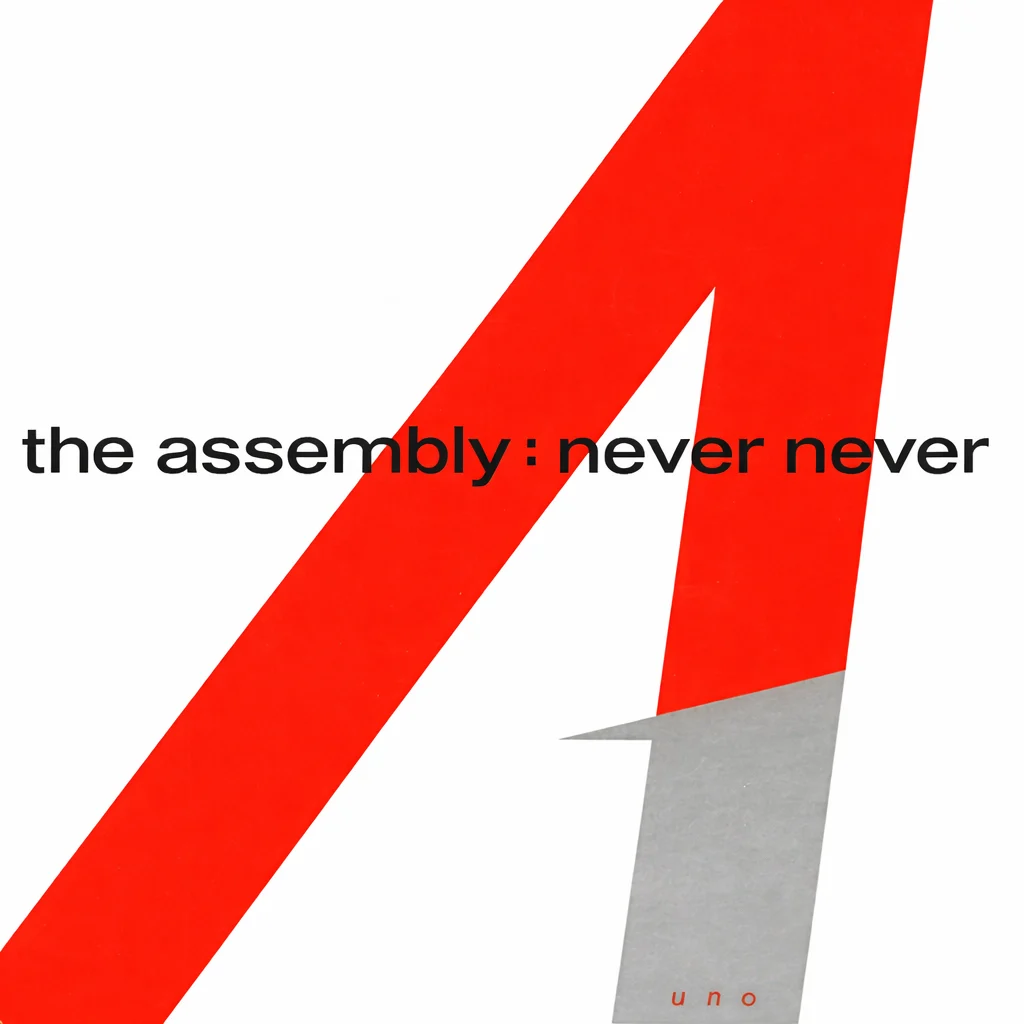
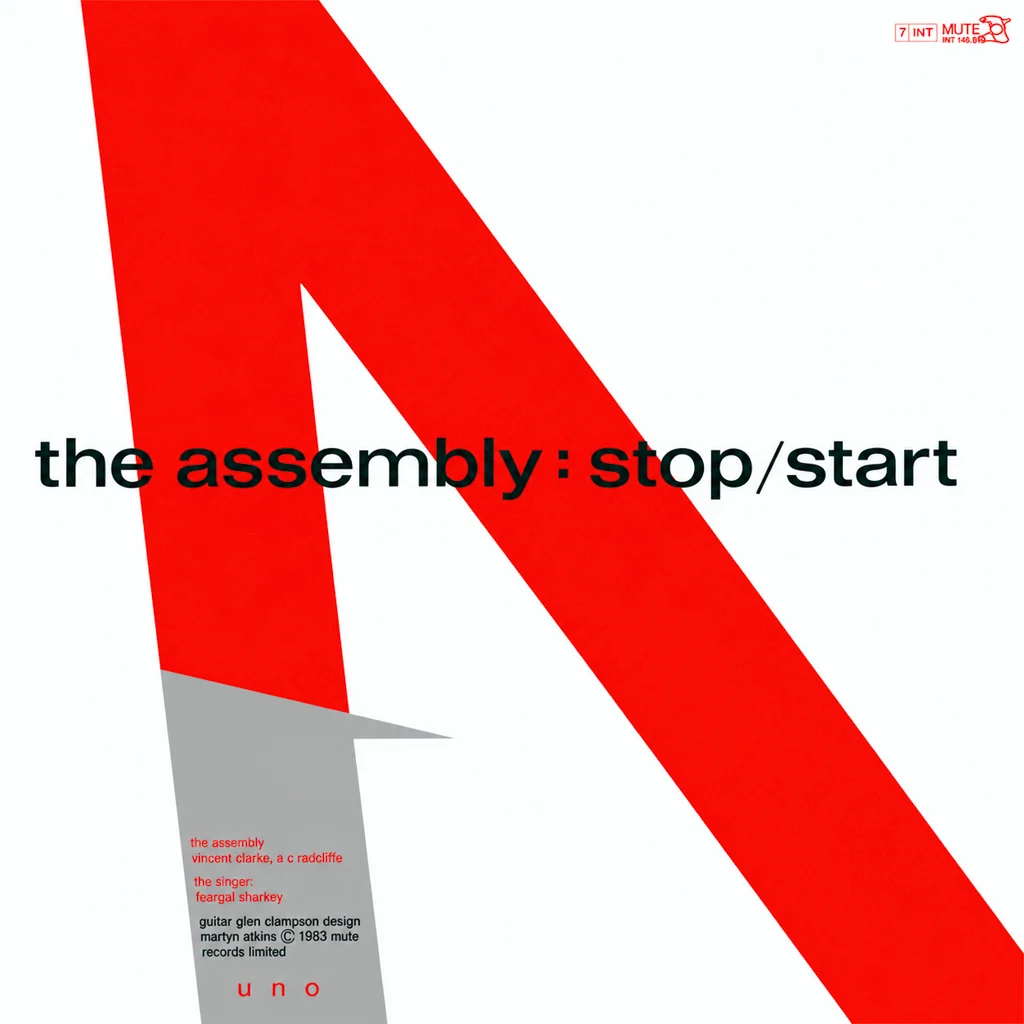
UK 7'' SLEEVE COVERS
Shown below are the picture sleeve covers (front and back) for the UK release of this single. If no cover sleeve was issued in the UK, we will display another country’s picture sleeve.
UK 7'' TRACK LISTING
| A-Side | Never Never (3:46) (Vince Clarke) Produced By The Assembly |
| B-Side | Stop / Start (3:29) (Vince Clarke, Eric Radcliffe) Produced By The Assembly |
CHART PERFORMANCE (80s Chart only)
| UK Top 40 Chart Run [8 Weeks] – 12th November 1983 – 31st December 1983 |
OFFICIALLY RELEASED VERSIONS
All officially released versions that appeared in the 80s:-
- Never Never (Single Version) (3:46)
- Never Never (Extended Version) (5:53)
To hear the FULL version of the songs below, you will need an active Spotify account (Free one). Just log in on your desktop/tablet or phone to hear the FULL versions.
OFFICIAL VIDEO
SONG LYRICS
I know just what to say
It’s just a game I play
Now I’m here on my own
I’d like to be with you
I guess you always knew
Still I’m all alone
I know the story
Got it all worked out
It never happens to me
It never happens to me
(Maybe that’s the way my life was meant to be)
It never happens to me
It never happens to me
(Love’s just a door that’s locked and there’s no key)
It never happens to me
I know my every line
It’s just a waste of time
Guess it’s all such a shame
I’ve seen it all before
And every time I’m sure
That it ends up the same
I know the story
Got it all worked out
Never happens to me
It never happens to me
(Maybe that’s the way my life was meant to be)
It never happens to me
It never happens to me
(Love’s just a door that’s locked and there’s no key)
It never happens to me
I know just what to say
It’s just a game I play
Now I’m here on my own
I’d like to be with you
I guess you always knew
Still I’m left all alone
I know the story
Got it all worked out
It never happens to me
It never happens to me
(Maybe that’s the way my life was meant to be)
It never happens to me
It never happens to me
(Love’s just a door that’s locked and there’s no key)
It never happens to me
It never happens to me
It never happens to me
(Maybe that’s the way my life was meant to be)
It never happens to me
It never happens to me
(Love’s just a door that’s locked and there’s no key)
It never happens to me
It never happens to me
(Maybe that’s the way my life was meant to be)
It never happens to me
Written by Vince Clarke
1 Comment
Hello All
Have we made any mistakes in this posting? Feel free to let us know (we’d appreciate it!)
Regards
Admin