The Rolling Stones’ 1986 release of “Harlem Shuffle” stands as a fascinating, polarizing artifact in the band’s storied discography, serving as the lead single for their contentious album “Dirty Work.” Originally written and recorded by the rhythm-and-blues duo Bob & Earl in 1963, the song was a modest hit that showcased the smooth, synchronized vocal interplay and driving groove characteristic of early 1960s soul music. When the Rolling Stones tackled the track more than two decades later, they did not just cover it; they supercharged it with the aggressive, glossily polished production values of the mid-1980s. This reinvention captured a legendary rock band at a volatile artistic crossroads, attempting to honor their deep rhythm-and-blues roots while navigating a rapidly changing pop music landscape.
To understand why the Rolling Stones chose to cover “Harlem Shuffle” in 1985, one must look at the internal dynamics of the band at the time. The relationship between Mick Jagger and Keith Richards was at an all-time low, a period often referred to by fans and historians as the “Third World War” of the band. Jagger was deeply focused on his burgeoning solo career, while Richards was fiercely committed to keeping the Stones active as a cohesive unit. In the midst of this freezing creative climate, the band struggled to write cohesive original material for the “Dirty Work” sessions. Turning to a classic R&B track was a natural regression to safety; it was the exact kind of music that had brought Jagger and Richards together as teenagers on a Dartford train platform in 1961.
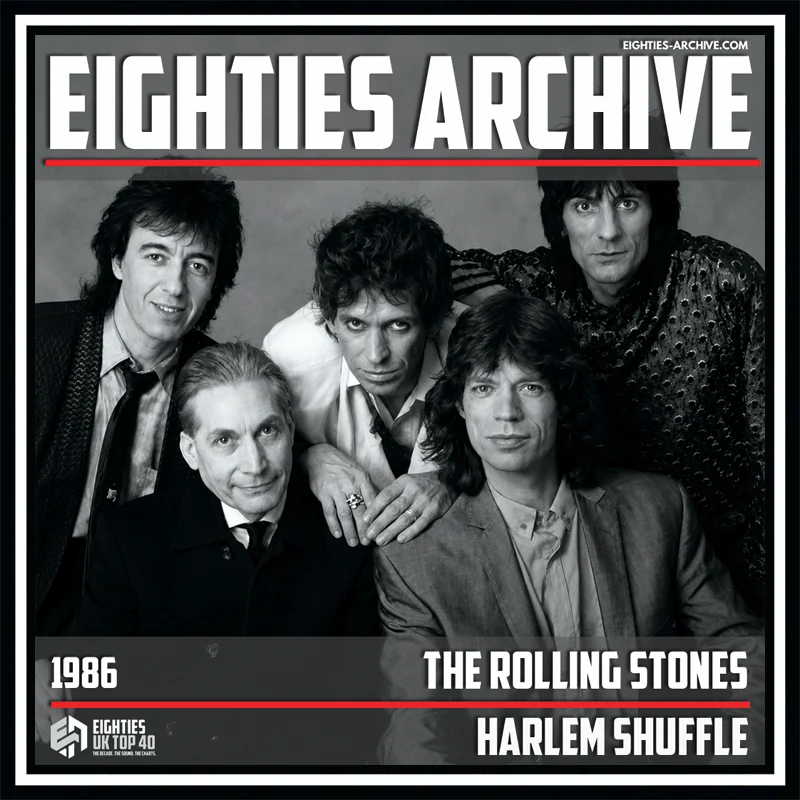
Musically, the Rolling Stones’ version of “Harlem Shuffle” is a maximalist explosion of sound, heavily influenced by the production style of Steve Lillywhite, who co-produced the album alongside the band. The track strips away the swing and loose organic warmth of Bob & Earl’s original version, replacing it with a heavy, mechanized backbeat and a wall of synthesized horns. Charlie Watts’ drumming is massive and unforgiving, anchored by a booming bass drum that firmly plants the song on 1980s dancefloors. Keith Richards and Ronnie Wood provide a thick layer of jagged, heavily processed guitar riffs that weave through the electronic textures. The result is a sonic juggernaut that sounds less like a gritty Harlem block party and more like a high-tech studio experiment, reflecting the decade’s obsession with sonic scale and digital clarity.
Mick Jagger’s vocal performance on the track is an exercise in pure, stylized bravado. Jagger approaches the lyrics—which are essentially an instructional guide to a popular dance step—with a gravelly, theatrical intensity. He pushes his voice to the edge, ad-libbing heavily and trading vocal lines with an impressive roster of backing vocalists, most notably the legendary soul singer Bobby Womack. Womack’s raw, gospel-infused grit acts as a perfect foil to Jagger’s slick rock-star delivery, injecting a needed dose of authentic soul into the highly produced environment. The vocal arrangement feels crowded and chaotic, perfectly mirroring the turbulent energy that defined the band’s personal relationships during the album’s creation.
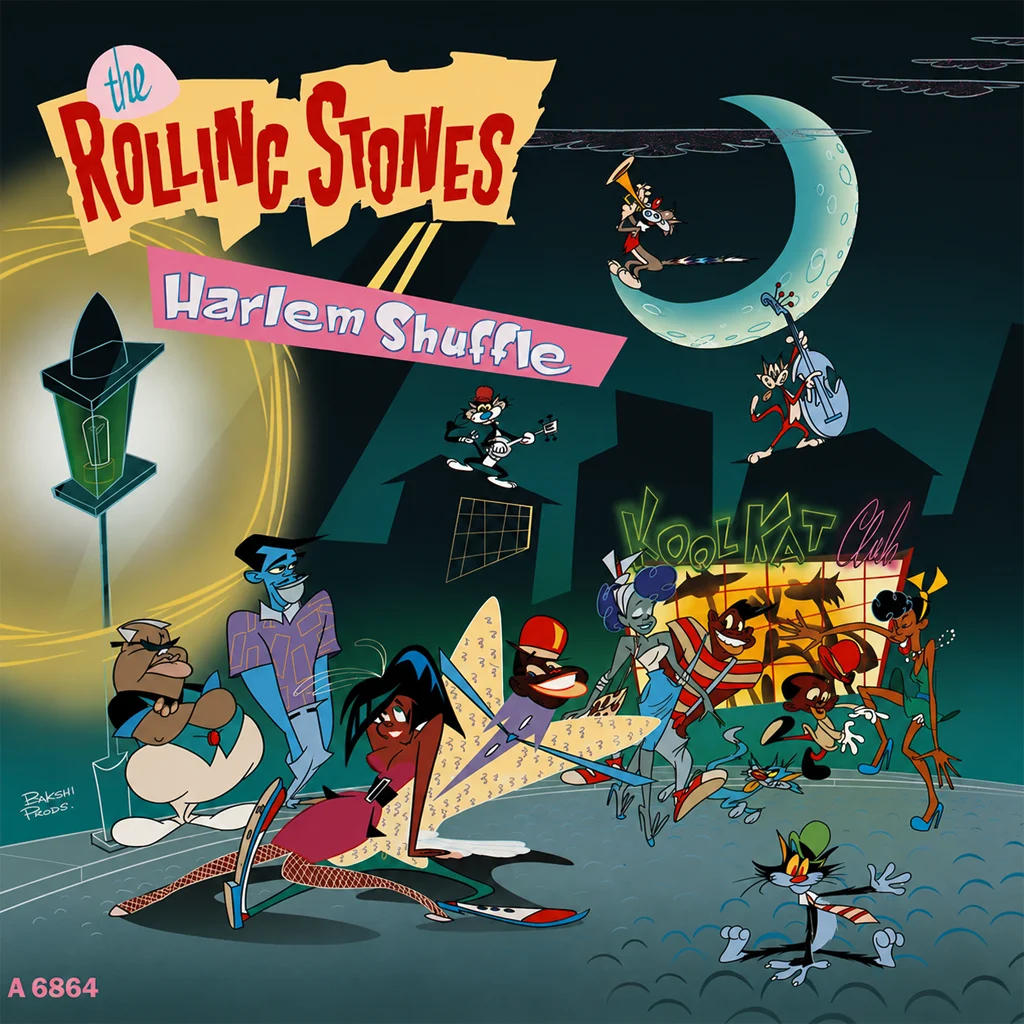
The visual representation of the song played a massive role in its cultural footprint. The accompanying music video, directed by animation legend Ralph Bakshi and future “The Ren & Stimpy Show” creator John Kricfalusi, was a groundbreaking blend of live-action footage and vibrant, grotesque animation. The video features Jagger, Richards, and the rest of the band performing in a gritty urban landscape alongside cartoon cats and assorted animated characters doing the titular shuffle. The video’s colorful, anarchic visual style was tailor-made for heavy rotation on MTV, helping to introduce the aging rock icons to a completely new generation of viewers who were more accustomed to watching synth-pop and hair-metal acts.
Commercially, “Harlem Shuffle” was a notable success, proving that the Rolling Stones still possessed significant chart power despite their internal fractures. The single reached number five on the US Billboard Hot 100 and peaked at number thirteen on the UK Singles Chart. It was the band’s first cover song to be released as a lead single since their 1965 version of “The Last Time,” a fact that critics at the time pointed to as a sign of creative exhaustion. Yet, despite the mixed critical reception of the “Dirty Work” album as a whole, the single proved to be a durable radio staple throughout the spring of 1986, demonstrating the enduring commercial appeal of the Stones’ brand of rock-infused rhythm and blues.
Decades later, “Harlem Shuffle” remains an intriguing piece of Rolling Stones history. It stands as a document of a band surviving its own near-destruction by leaning into the music that originally inspired them, even if they had to wrap that music in the neon-tinted, heavily compressed production of the 1980s. The track proved that no matter how deep the fractures ran between Jagger and Richards, their shared musical DNA in American rhythm and blues could still produce a hit. It remains a fascinating, high-energy collision of 1960s soul songwriting and 1980s rock excess, occupying a unique and deeply rhythmic corner of the band’s massive musical legacy.
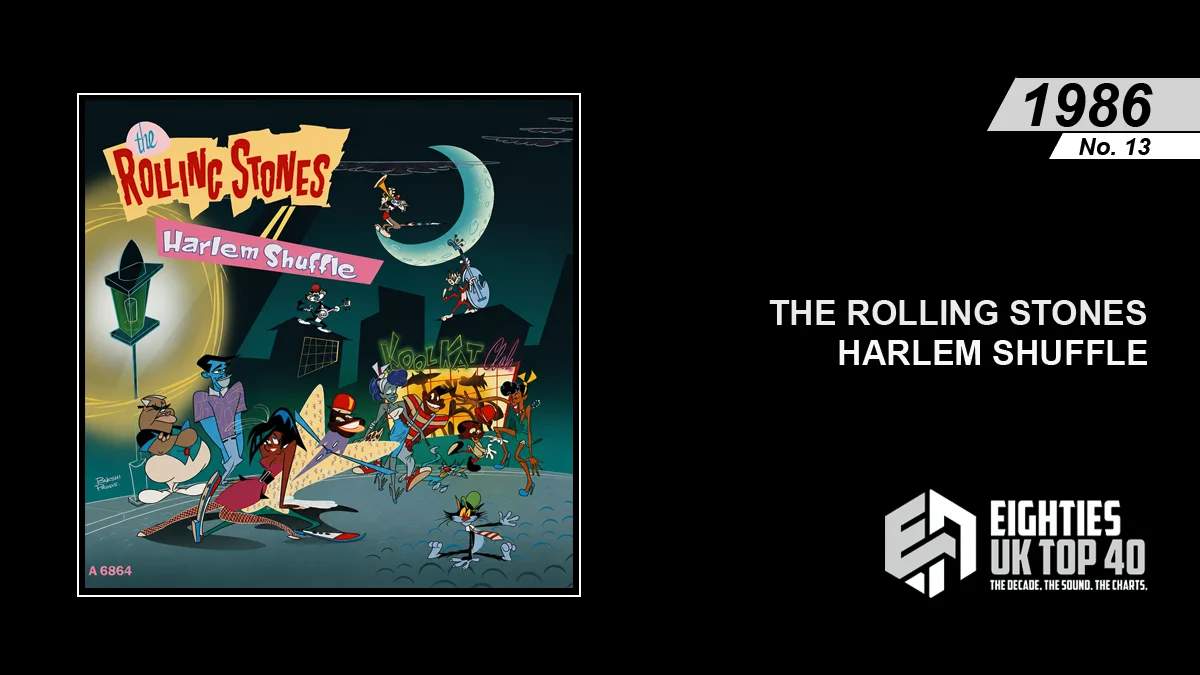
The song peaked at No. 13 in the UK Singles Chart on 22nd March 1986.
Lyrics
You move it to the left, yeah, and you go for yourself
You move it to the right, yeah, if it takes all night
Now take it kinda slow
With a whole lot of soul
Don’t move it too fast
Just make it last
You scratch just like a monkey
Yeah ya do, real cool
You slide it to the limbo
Yeah, how low can you go?
Now come on baby, come on baby!
Don’t fall down on me now
Just move it right here to the Harlem Shuffle
Huh, yeah, yeah, yeah, do the Harlem Shuffle
Yeah, yeah, yeah, do the Harlem Shuffle
Hitch me hitch hike baby, across the floor
Whoa, whoa, whoa, I can’t stand it no more
Do do the Monkey Shine
Yeah, yeah, yeah, do the Harlem Shuffle
Now come on, baby (oh, come on baby!), now get into your slide
Just ride, ride, ride little pony ride
Yeah, yeah, yeah, do the Harlem Shuffle
(Do the Monkey Shine)
Yeah, yeah, yeah, shake your tail feather, baby
(Shake shake, shake shake)
Come on
Come on
Do the Harlem Shuffle
Get down
Get down
Do the Monkey Shine
Written By Robert Nelson Relf, Earl Lee Nelson