
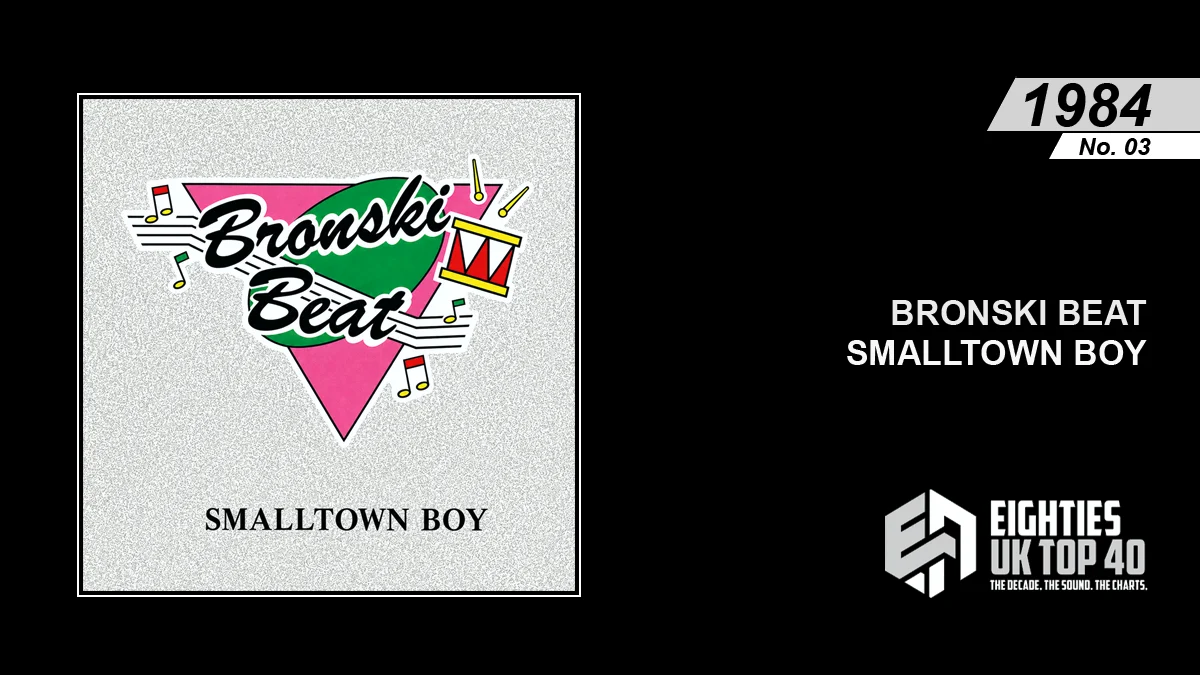
Eighties Archive Song Number
Highest Chart Position
Date Released
Date Of UK Top 40 Entry
Genre
Label
Catalogue Number
Story Behind The Song
Released in 1984, “Smalltown Boy” was the breakthrough single by Bronski Beat and remains one of the most powerful and influential songs of the 1980s. Written by Jimmy Somerville, Steve Bronski and Larry Steinbachek, it was the lead single from the trio’s debut album, The Age Of Consent. Combining emotionally charged lyrics with an innovative synth-pop arrangement, the song tackled subjects that were rarely addressed in mainstream pop music at the time.
The lyrics tell the story of a young man forced to leave his hometown after experiencing rejection, isolation and prejudice because of his sexuality. Jimmy Somerville’s soaring falsetto conveys both vulnerability and determination, giving the song an emotional intensity that resonated with listeners around the world. Built around haunting synthesisers, driving electronic rhythms and a memorable melody, the production creates an atmosphere that perfectly complements the song’s themes of loneliness, hope and self-discovery.
“Smalltown Boy” established Bronski Beat as one of the most distinctive voices of the decade, demonstrating that pop music could combine commercial appeal with meaningful social commentary. Its groundbreaking music video reinforced the song’s message by portraying the struggles faced by many young gay people during the 1980s. Today, the song is regarded as a landmark in British pop history, celebrated for its honesty, compassion and timeless production. More than four decades after its release, “Smalltown Boy” continues to inspire new generations and remains one of the defining synth-pop recordings of the era.
The song peaked at No. 03 in the UK charts on 23rd June 1984.
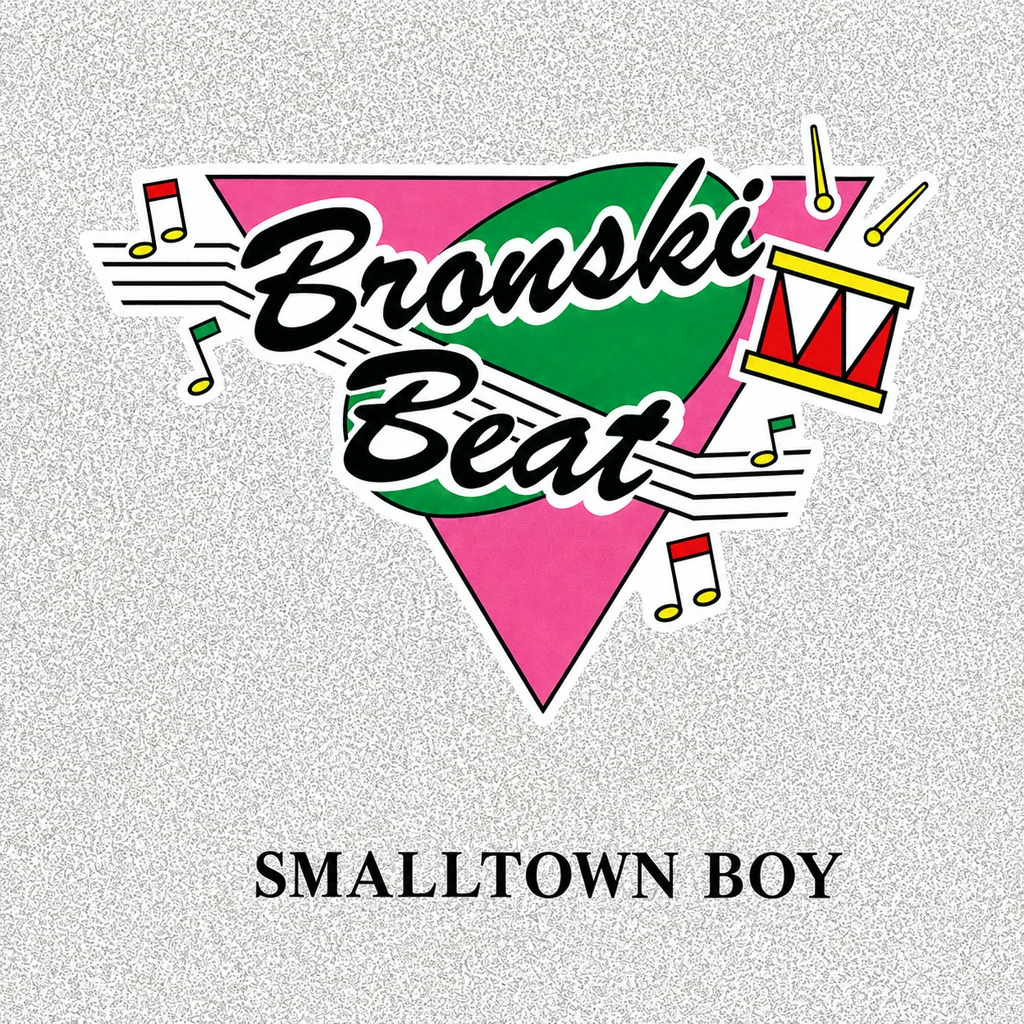
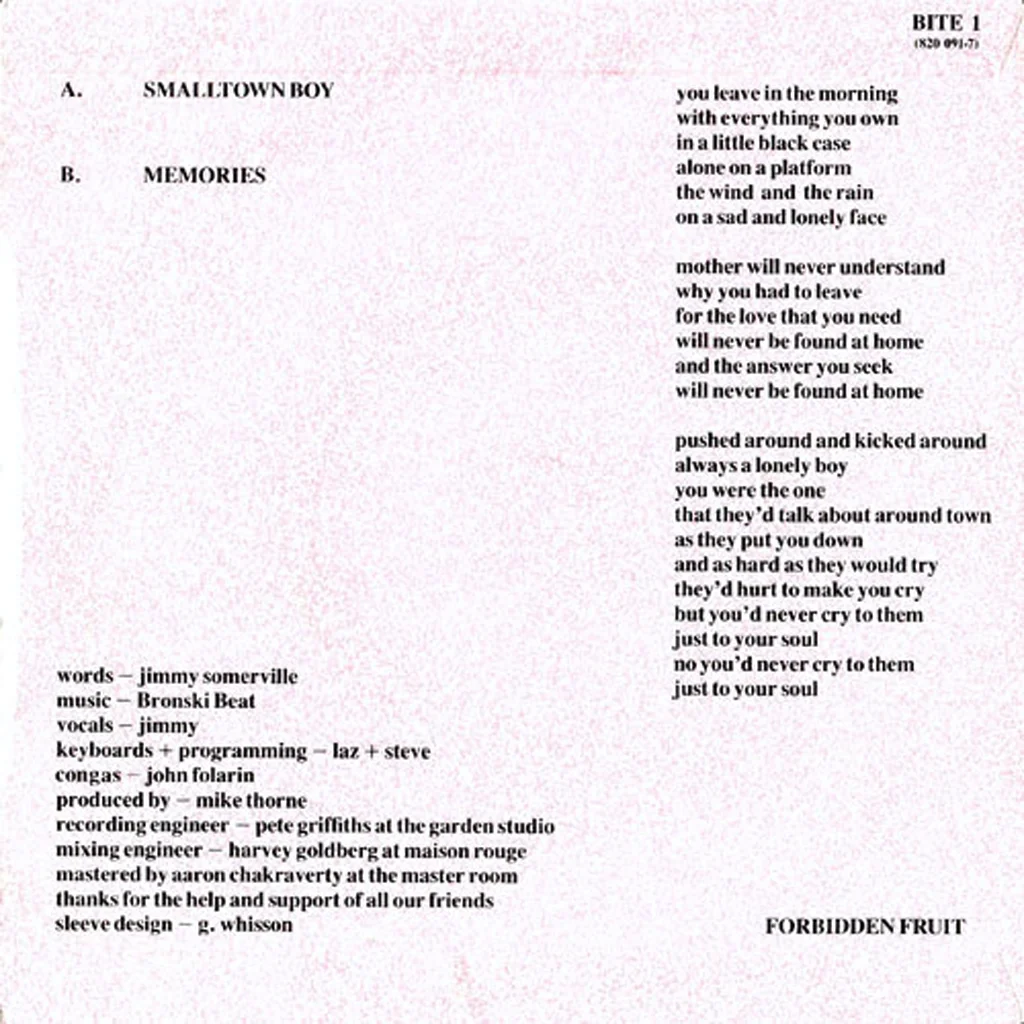
UK 7'' SLEEVE COVERS
Shown below are the picture sleeve covers (front and back) for the UK release of this single. If no cover sleeve was issued in the UK, we will display another country’s picture sleeve.
UK 7'' TRACK LISTING
| A-Side |
Smalltown Boy (4:04)
(Somerville, Steinbachek, Bronski) Produced By Mike Thorne |
| B-Side | Memories (2:55) (Somerville, Steinbachek, Bronski) Produced By Mike Thorne |
CHART PERFORMANCE (80s Chart only)
| UK Top 40 Chart Run [11 Weeks] – 2nd June 1984 – 11th August 1984 |
OFFICIALLY RELEASED VERSIONS
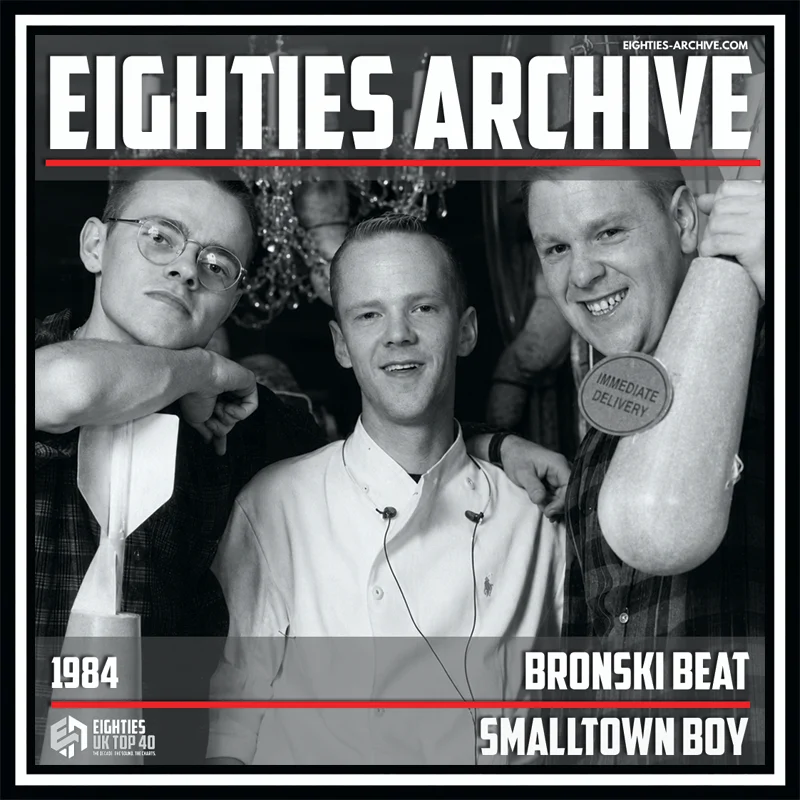
All officially released versions that appeared in the 80s:-
- Smalltown Boy (Single Version) (4:04)
- Smalltown Boy (12″ Version) (9:01)
- Smalltown Boy (Remix) (6:04)
- Smalltown Boy (Reprise) (2:45)
- Smalltown Boy (Album Version) (5:02)
- Smalltown Boy (Instrumental) (5:03)
To hear the FULL version of the songs below, you will need an active Spotify account (Free one). Just log in on your desktop/tablet or phone to hear the FULL versions.
OFFICIAL VIDEO
SONG LYRICS
To your soul
To your soul
Cry
Cry
Cry
You leave in the morning with everything you own in a little black case
Alone on a platform, the wind and the rain on a sad and lonely face
Mother will never understand why you had to leave
But the answers you seek will never be found at home
The love that you need will never be found at home
Run away, turn away, run away, turn away, run away
Run away, turn away, run away, turn away, run away (Oooh)
Pushed around and kicked around, always a lonely boy
You were the one that they’d talk about around town as they put you down
And as hard as they would try they’d hurt to make you cry
But you never cried to them, just to your soul
No, you never cried to them, just to your soul
Run away, turn away, run away, turn away, run away
(Crying to your soul, crying to your soul)
Run away, turn away, run away, turn away, run away
(Crying to your soul, crying to your soul)
Run away, turn away, run away, turn away, run away (Cry)
Run away, turn away, run away, turn away, run away
Cry, boy, cry
Cry, boy, cry
Cry, boy, cry, boy, cry
Cry, boy, cry, boy, cry
Cry, boy, cry, boy, cry
Cry, boy, cry, boy, cry
Cry, boy, cry, boy, cry
Cry, boy, cry, boy, cry
(Cry)
You leave in the morning with everything you own in a little black case
Alone on a platform, the wind and the rain on a sad and lonely face
Run away, turn away, run away, turn away, run away (Cry)
Run away, turn away, run away, turn away, run away (Cry)
Run away, turn away, run away, turn away, run away
(To your soul, to your soul)
Run away, turn away, run away, turn away, run away (Cry)
Run away, turn away, run away, turn away, run away (Cry)
Run away, turn away, run away, turn away, run away (To your soul)
Run away, turn away, run away, turn away, run away
(To your soul)
Written By Somerville, Steinbachek, Bronski
1 Comment
Hello All
Have we made any mistakes in this posting? Feel free to let us know (we’d appreciate it!)
Regards
Admin