
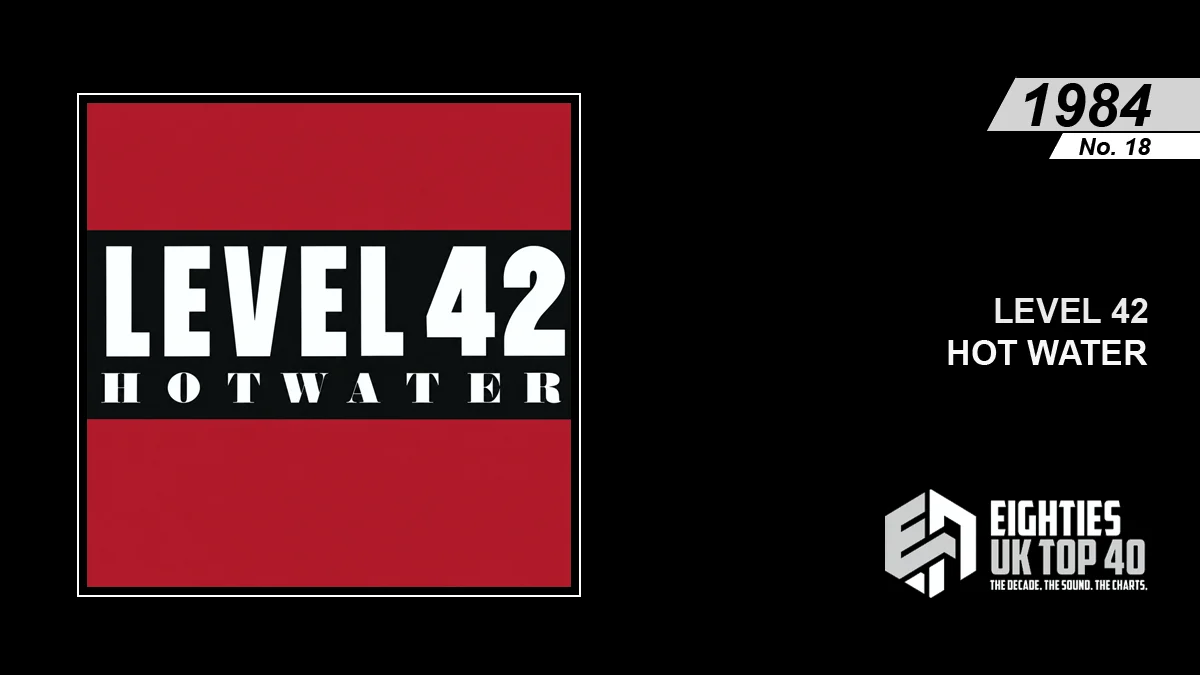
Eighties Archive Song Number
Highest Chart Position
Date Released
Date Of UK Top 40 Entry
Genre
Label
Catalogue Number
Story Behind The Song
Released in 1984, “Hot Water” was the lead single from Level 42’s album True Colours and marked an important step in the band’s evolution from jazz-funk favourites to mainstream pop success. Written by Mark King, Mike Lindup, Phil Gould, Boon Gould and Wally Badarou, the song retained the group’s trademark musicianship while embracing a brighter, more accessible sound. Produced by Ken Scott and Level 42, it combined infectious grooves with polished production and irresistible hooks.
The song centres on the excitement and intensity of romantic attraction, using the phrase “hot water” as a metaphor for becoming deeply involved in an emotional relationship. Mark King’s distinctive lead vocal is matched by his celebrated slap bass technique, which drives the track with remarkable energy. Mike Lindup’s vibrant keyboards, Phil Gould’s crisp drumming and the band’s tight rhythm section create a rich, sophisticated arrangement that balances funk, pop and soul influences. The addition of a lively brass section gives the recording extra punch and contributes to its uplifting, feel-good atmosphere.
“Hot Water” introduced a broader audience to Level 42’s unique blend of technical excellence and commercial songwriting. It demonstrated that the band could retain their musical identity while producing radio-friendly hits with wide appeal. The song became a staple of their live performances and remains one of their most recognisable recordings from the mid-1980s. Today, “Hot Water” is celebrated for its infectious groove, memorable chorus and outstanding musicianship, standing as one of the defining tracks in Level 42’s catalogue and an enduring favourite among fans of 1980s British pop and jazz-funk.
The song peaked at No. 18 in the UK charts on 22nd September 1984.
UK 7'' SLEEVE COVERS
Shown below are the picture sleeve covers (front and back) for the UK release of this single. If no cover sleeve was issued in the UK, we will display another country’s picture sleeve.


UK 7'' TRACK LISTING
| A-Side |
Hot Water (3:40)
(M.King, P. Gould, M. Lindup, W.Badarou) Produced By Ken Scott |
| B-Side |
Standing In The Light (3:43)
(M.King, P. Gould, W.Badarou) Produced By Larry Dunn, Verdene White |
CHART PERFORMANCE (80s Chart only)
| UK Top 40 Chart Run [7 Weeks] – 1st September 1984 – 13th October 1984 |
OFFICIALLY RELEASED VERSIONS
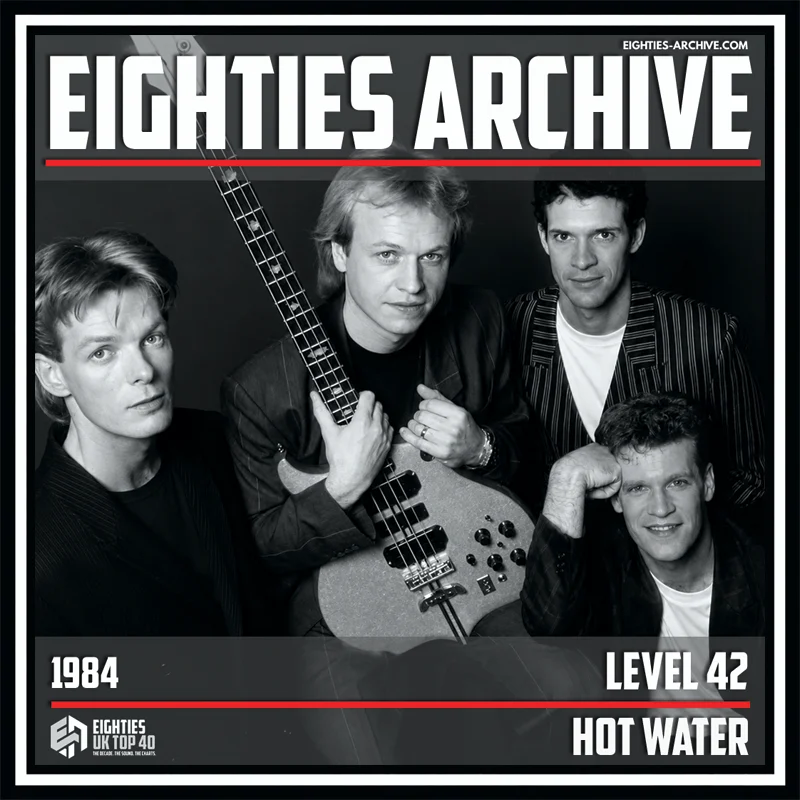
All officially released versions that appeared in the 80s:-
- Hot Water (Single Version) (3:40)
- Hot Water (Mastermix) (10:24)
- Hot Water (Album Version / Remix) (5:35)
To hear the FULL version of the songs below, you will need an active Spotify account (Free one). Just log in on your desktop/tablet or phone to hear the FULL versions.
OFFICIAL VIDEO
SONG LYRICS
Tell me something
Why do I always find it hard just to get along
Try my best for nothing
Every little thing I do is wrong
Feel it in my brain
Driving me insane
Round and round
The same old tune
Daddy’s on the phone
You know you’re not alone
Turn that down
And clean up your room
Sons and daughters
(Don’t fall in)
In hot water
Sons and daughters
(They don’t do)
What they oughta
Tell (tell) you something (why?)
Music is the key to set me free
To the beat (on the street) I’m jumping
Forgetting all the things they said ’bout me (why?)
Here it comes again
Chugging like a train
Round and round
An impeccable groove
I know it’s getting late
But I won’t hesitate
Can’t slow down
Got to do what I do
Sons and daughters
(Always in)
In hot water
Wasting time
Is a crime in their eyes
But I’m still young
So much time to decide what to do
I don’t need confirmation
For my boyhood extrapolation
Though I’m not sure of my direction
I have the groove for my protection
Here it comes again
Chugging like a train
Round and round
An impeccable groove
I know it’s getting late
But I won’t hesitate
Can’t slow down
Got to do what I do, what I do
Sons and daughters
(Don’t fall in)
In hot water
(When they fall by the way)
Sons and daughters
(They don’t do)
What they oughta
Sons and daughters
(Don’t fall in)
In hot water
(When they fall by the way)
Sons and daughters
(They don’t do)
What they oughta
Sons and daughters
(Don’t fall in)
In hot water
(When they fall by the way)
Written By M. King, P. Gould, M. Lindup, W. Badarou
1 Comment
Hello All
Have we made any mistakes in this posting? Feel free to let us know (we’d appreciate it!)
Regards
Admin