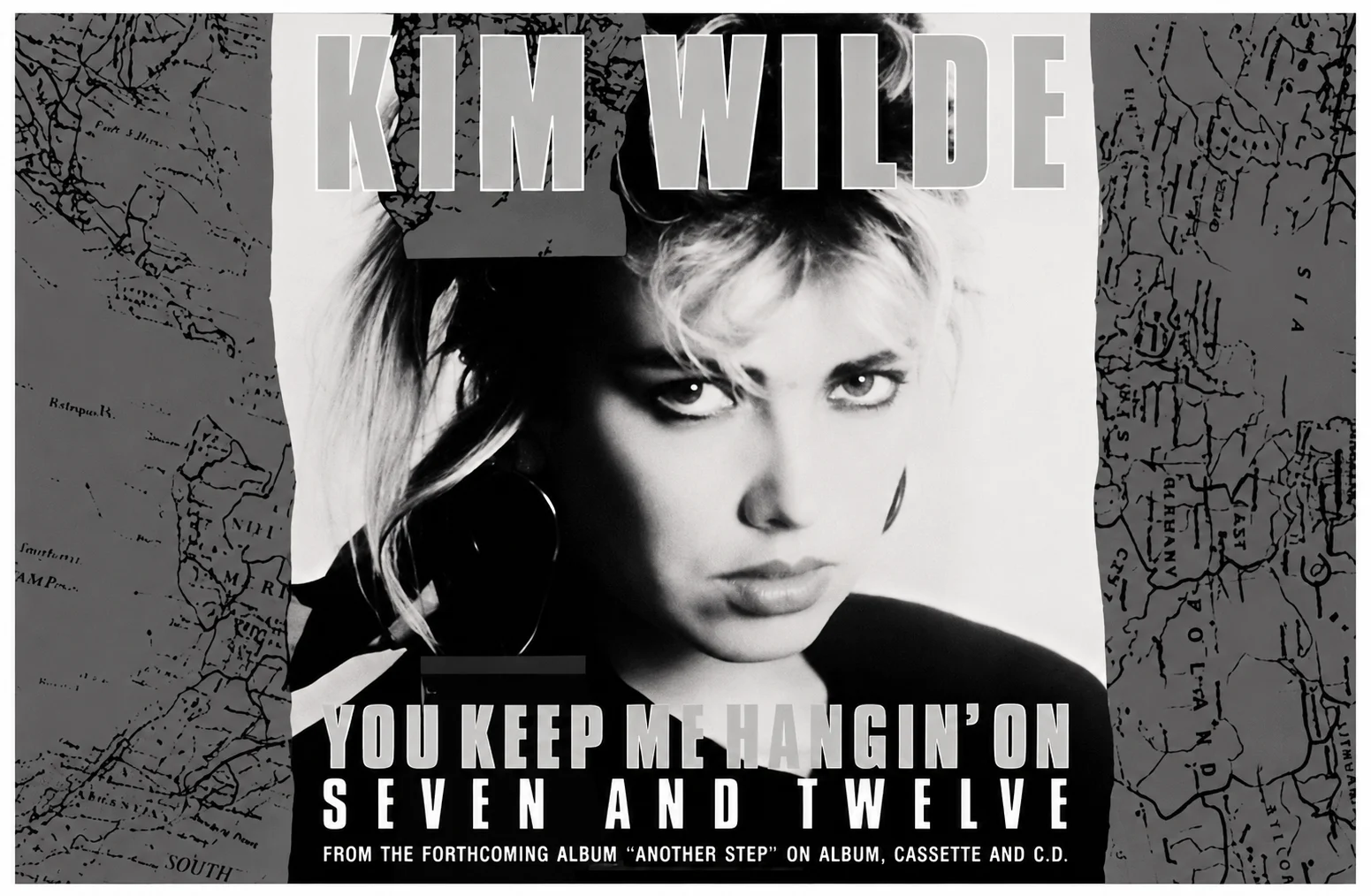
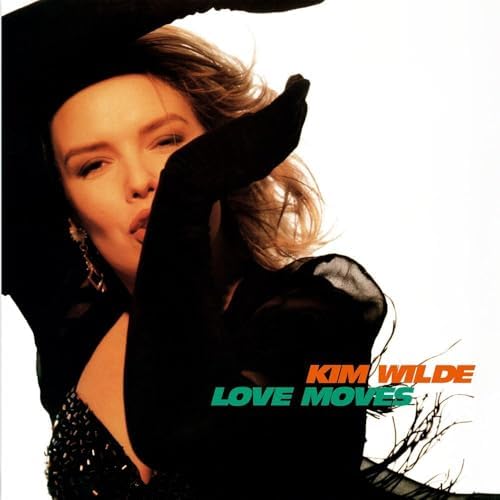
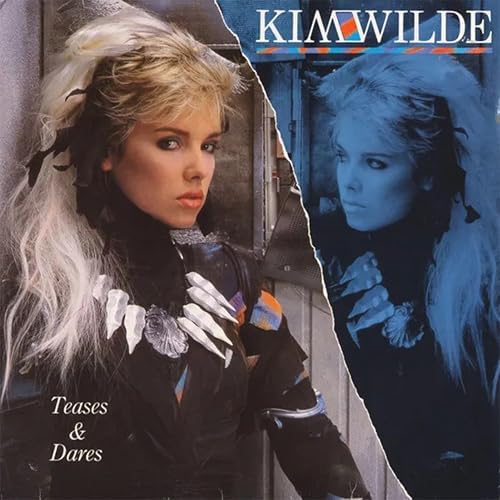
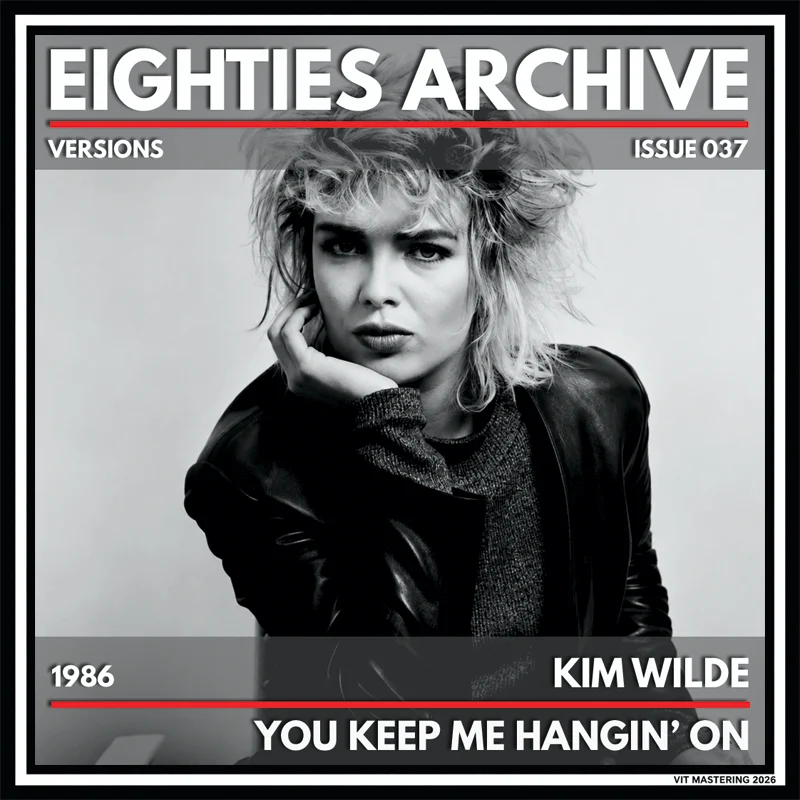
In the autumn of 1986, British pop singer Kim Wilde released a high-octane cover of the Holland-Dozier-Holland classic You Keep Me Hangin’ On, completely redefining the track for a new generation. Originally recorded by Motown icons The Supremes in 1966, the song had already seen a heavy psych-rock reinvention by Vanilla Fudge a year later. However, it was Wilde’s aggressively modern version that captured the sonic spirit of the late 1980s, striking a perfect balance between synthesized precision and raw rock attitude. Produced by her brother, Ricki Wilde, the track abandoned the soulful, heart-wrenching undertones of the original. In their place, the duo injected an intense, industrialized drive that transformed the story of romantic entrapment into an anthem of dancefloor defiance.
The creative genesis of the cover was entirely accidental. While working on material for her fifth studio album, Another Step, Ricki Wilde was experimenting with synthesizer chord progressions in the studio. He noticed the sequence matched the skeleton of the old Motown hit. Initially hesitant about recording a cover, he built a rapid, electronic backing track and presented it to his sister. Kim Wilde immediately recognized the explosive potential of the demo. Rather than trying to replicate Diana Ross’s smooth delivery, she approached the vocal performance with a sharper, detached edge that mirrored the cold mechanics of the instrumentation. This musical shift aligned seamlessly with the lyrics, which depict a narrator demanding to be set free from a manipulative, hot-and-cold ex-lover.
The aesthetic of the track was anchored heavily in the burgeoning Hi-NRG and synth-pop movements. Instead of the famous Morse code guitar riff that defined the Motown original, the Wildes deployed a barrage of jagged synthesizer stabs, a pulsing, sequenced bassline, and thunderous, gated snare drums. This aggressive sonic architecture turned the song into a massive club weapon. It also featured a distinct, punchy drum break that would inadvertently become a sought-after staple for early hip-hop and dance music samplers. Kim Wilde’s vocals delivered the perfect counterpoint to this technological wall of sound. She traded her early new-wave innocence for a tougher, more assertive vocal persona that commanded the listener’s attention from the very first line.
Upon its global release by MCA Records in October 1986, the track triggered a massive international career resurgence for Wilde. While she had achieved considerable success in Europe earlier in the decade with hits like “Kids in America” and “Cambodia,” the American market had remained largely elusive. “You Keep Me Hangin’ On” changed everything. In June 1987, the single climbed to the absolute peak of the Billboard Hot 100, securing the number-one spot for a week. This monumental feat made Kim Wilde only the fifth British female solo artist in history to top the American charts. The track also dominated international charts, reaching number one in Australia, Canada, and Norway, while peaking at a triumphant number two on the Official UK Charts.
The track’s chart triumph also placed it in a very exclusive tier of pop history. It became one of the rare songs to reach number one on the Billboard chart via two completely different musical artists. This dual-milestone cemented the timelessness of the songwriting by Holland-Dozier-Holland, proving the composition could easily morph across wildly distinct musical eras. To support the single, Wilde filmed an iconic, heavily-rotated music video that mirrored the track’s sultry, nocturnal energy. Sporting her signature bleached blonde hairstyle, dark leather, and dramatic makeup, Wilde’s visual presentation on MTV further solidified her status as a global style icon of the late-1980s pop landscape.
Decades after its release, Kim Wilde’s reimagining of the track stands as a masterclass in how to execute a pop cover. Rather than delivering a predictable, note-for-note copy of a classic, she and her brother fundamentally dismantled the source material and rebuilt it to match the digital futurism of their era. The track remains a definitive highlight of Wilde’s career and a permanent fixture on retro playlists worldwide, capturing the exact moment where classic 1960s soul songwriting collided beautifully with the neon-soaked energy of 1980s dance-rock.
It peaked at No. 02 in the UK Singles Chart on 15th November 1986.
Lyrics
Keep me hangin’ on
Set me free, why don’t you, babe?
Get out my life, why don’t you, babe?
‘Cause you don’t really love me
You just keep me hangin’ on
Set me free, why don’t you, babe?
Get out my life, why don’t you, babe? (Ooh-woo, ooh)
‘Cause you don’t really need me
But you keep me hangin’ on
Why do you keep on coming around
Playing with my heart?
Why don’t you get out of my life
And let me make a brand new start?
Let me get over you
The way you’ve gotten over me, yeah
Set me free, why don’t you, babe?
Get out my life, why don’t you, babe? (Ooh-woo, ooh)
‘Cause you don’t really love me
You just keep me hangin’ on
Now you don’t really need me
You just keep me, hangin’ on
You say although we broke up
You still just wanna be friends
But how can we still be friends
When seeing you only breaks my heart again?
(And there ain’t nothing I can do about it)
Whoa-whoa-whoa
Whoa-whoa-whoa-whoa
Whoa-whoa-whoa-whoa
Whoa-whoa-whoa
Yeah, yeah
Get out, get out of my life
And let me sleep at night
‘Cause you don’t really love me
You just keep me (Hangin’ on), hangin’ on
You say you still care for me
But your heart and soul needs to be free
And now that you’ve got your freedom
You wanna still hold on to me
You don’t want me for yourself
So let me find somebody else
Set me free, why don’t you, babe?
Get out my life, why don’t you, babe? (Ooh-woo, ooh)
‘Cause you don’t really love me
You just keep me hangin’ on
Why don’t you be a man about it
And set me free? (Ooh-woo, ooh)
Now you don’t care a thing about me
You’re just using me, hey, abusing me
Get out, get out of my life
And let me sleep at night (Ooh-woo, ooh)
‘Cause you don’t really love me
You just keep me, hangin’ on (Ooh-woo, ooh)
Written By E. Holland, L. Dozier, B. Holland