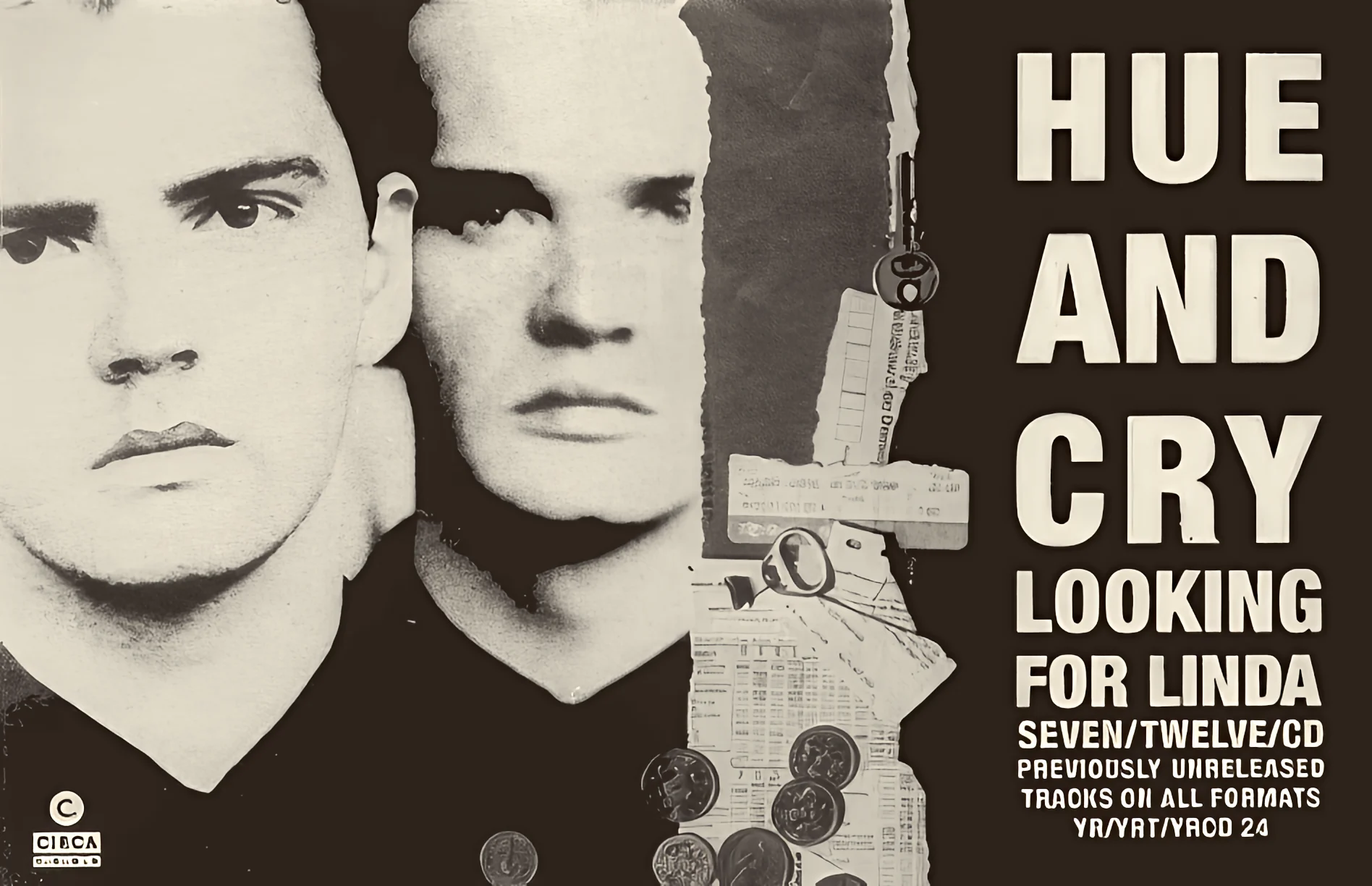
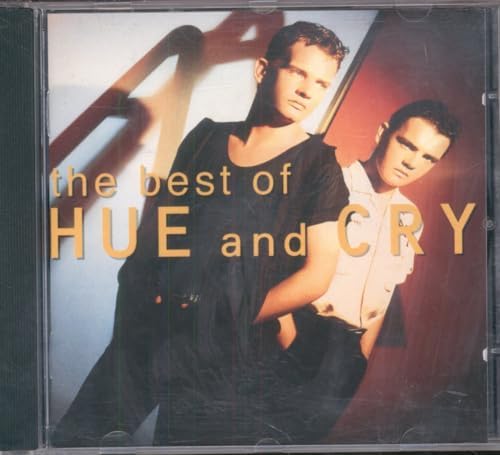
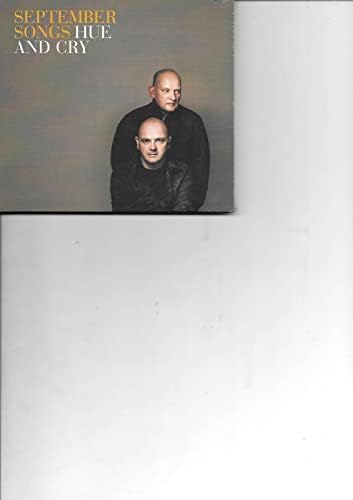
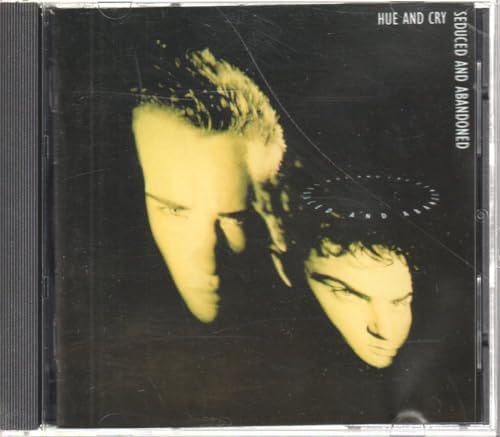
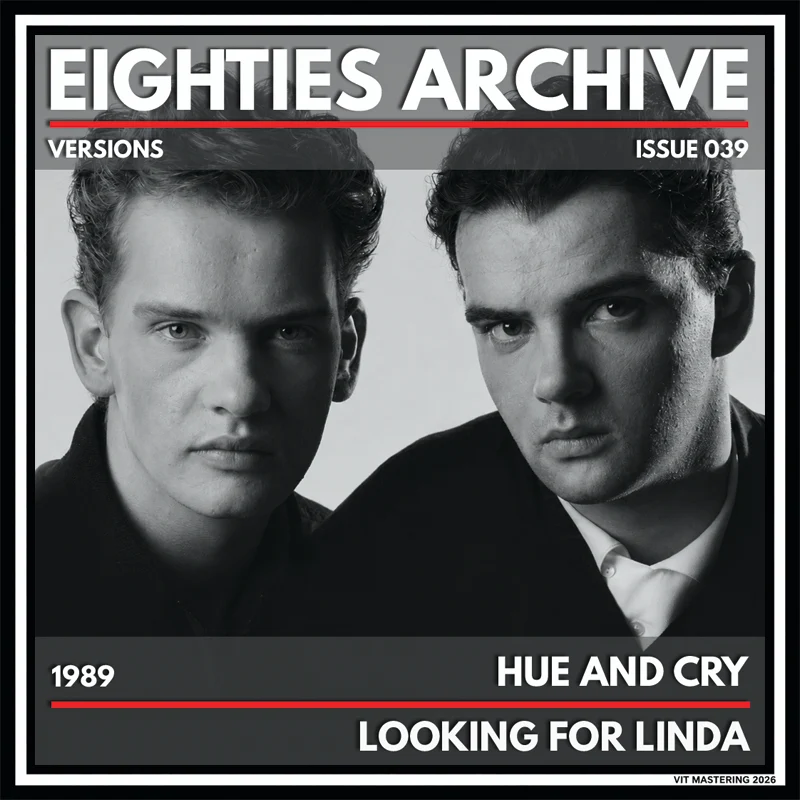
The Scottish sophisti-pop duo Hue and Cry achieved a major commercial and artistic triumph with their 1989 hit single Looking for Linda. Formed in 1984 by brothers Patrick and Gregory Kane, the band had already established their signature sound with their 1987 debut album Seduced and Abandoned, which featured the politically charged, Top 10 track Labour of Love. However, it was their sophomore album Remote, released in 1988, that proved they were not a one-hit wonder. Recorded at the legendary Sigma Sound Studios in Philadelphia, the album merged the band’s Scottish post-punk sensibilities with high-end, transatlantic soul and jazz production. Looking for Linda was released as a single from this album in January 1989, eventually climbing the UK Singles Chart to peak at number 15 in March of that year. The track cemented the band’s reputation for pairing smooth, radio-friendly grooves with lyrics that carried immense, often heavy narrative weight.
What elevates the track beyond standard late-1980s pop music is its deeply compelling, real-life backstory. Lyricist and vocalist Pat Kane based every word of the song on a literal, fifteen-minute encounter he had with a woman on a slow commuter train from Glasgow Central to Gourock. The woman had boarded the train in a state of high anxiety, asking if the carriage stopped at Paisley. Over the brief journey before she got off the train at Paisley Gilmour Street, she revealed to Kane that she was fleeing a deeply abusive, domestic situation. She explained that she had been sent out to buy a pack of cigarettes by her violent partner—the “him indoors” mentioned in the lyrics—and had instead kept running. She fled all the way to Leeds Central railway station, took an Intercity train, and was now returning north to find safety. Kane was profoundly moved by her bravery and the sheer weight of her survival story. Although they shared a fleeting, intense emotional connection—and even a brief kiss as the train reached her station—she vanished into the rainy Scottish evening, and Kane never saw or met her again.
The musical composition of the song deliberately contrasts with this heavy, melancholic subject matter. Produced by Harvey Jay Goldberg and James Biondolillo, the track utilizes a vibrant, up-tempo sophisti-pop rhythm driven by an intricate, pulsing bassline performed by the legendary American session player Will Lee. Gregory Kane’s sophisticated keyboard and horn arrangements lend the track a glossy, jazz-inflected soul atmosphere that keeps the song moving forward with the same momentum as the train in the narrative. Pat Kane’s vocal delivery is both passionate and technically masterful, shifting effortlessly between conversational verses and an anthemic, desperate chorus where he proclaims he will never stop looking for Linda. By wrapping a gritty, kitchen-sink drama of domestic survival inside a sleek, transatlantic pop production, the band created a fascinating artistic irony. It functioned perfectly as an up-tempo radio single while offering a detailed, empathetic portrait of a vulnerable woman reclaiming her autonomy.
Decades after its initial chart run, Looking for Linda continues to hold a special place in British pop history and the hearts of the band’s fan base. The song became a fixture on the iconic television show Top of the Pops in 1989, and it was later compiled onto major retrospective releases like Now That’s What I Call Music! 14. Pat Kane has frequently reflected on the track during interviews, noting that over the years, numerous women have approached him claiming to be the original Linda from the train. He has consistently maintained that none of them were the actual woman he met, remarking on how the real world often tries to claim a piece of a story when you write about reality. The enduring legacy of the song lies in its ability to capture a profound, micro-moment of human connection. It reminds listeners how a chance encounter with a stranger can leave an indelible mark on an artist’s soul, resulting in a timeless piece of music that continues to resonate as an anthem of escape, hope, and resilience.
The song peaked at No. 15 in the UK charts on 4th March 1989.
Lyrics
I was not looking for Linda
But Linda found me
Hiding away on the slow train home
Is this one for Paisley?
Oh you’ve got to help me
She used to work there a long time ago
She spent thirty-five pounds on one pack of ciggies
Running an errand for, him indoors
But then she kept running
Straight down to Leeds Central
Took Inner-City
And left her remorse
I’m looking out for Linda
Never stop looking
Never stop looking for Linda
[Looking out for Linda]
Never stop looking
Never stop looking for Linda
[Looking out for Linda]
I was looking at Linda
Linda was pleased
She’d been fighting firewater all that day
She said, “Me and drinking means only one thing”
Then whispered that she was too polite to say
The train door was jammed
But the time wasn’t right
Some guy was holding her back from the window
I said, “a fine man”
She said “So arrogant!”
“I will decide when I go, or I don’t go”
I’m looking out for Linda
Never stop looking
Never stop looking for Linda
[Looking out for Linda]
Never stop looking
Never stop looking for Linda
[Looking out for Linda]
I was kissing with Linda
As Paisley came closer [closer]
She’s wiser than alcohol, master of men
Such a connection is finer than true things
I’ll always be looking for Linda, again
I’m looking out for Linda
In the rain
I’m looking out for Linda
Never stop looking
Never stop looking for Linda
[Looking out for Linda]
Never stop looking
Never stop looking for Linda
[Looking out for Linda]
Never stop looking
Ah, never stop looking [ah the sweet girl]
[Looking for Linda]
Looking for the girl, yeah
[Looking for Linda]
Looking for the girl, yeah
Written By Pat Kane, Greg Kane